
Washington Examiner drops ‘allegedly’ to call Shapiro cowardly
Washington Examiner
Josh Shapiro too cowardly to denounce black man’s racism in alleged killing of white Philadelphia police officerRead it where it was published
Two words convict: cowardly for the governor, racism pinned to a man by his color. Your contempt arrives before the fact that the charges carry no hate count, and 13 days before midterms it lands on a Democrat.
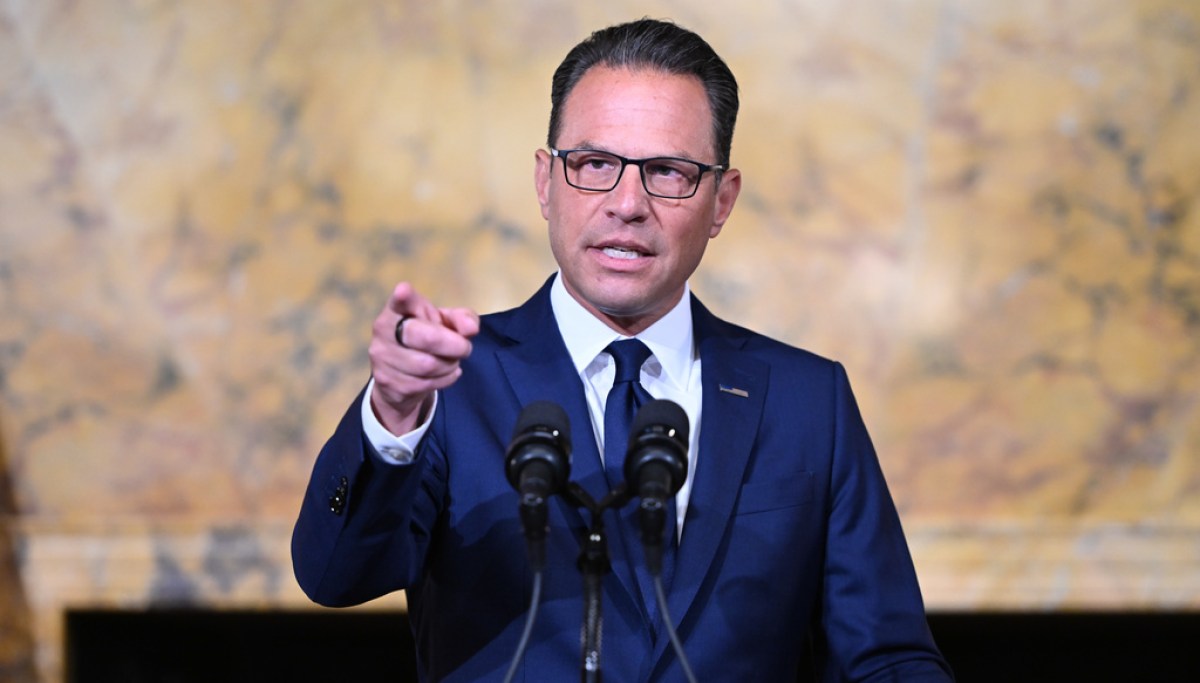
A Washington Examiner opinion headline on October 21 calls Gov. Josh Shapiro “too cowardly” to denounce a race motive in the arrest report on the October 10 killing of Officer Shane Seiber. No hate-crime count is charged.
What they said
Philadelphia police officer Shane Seiber, 40, was shot and killed answering a call in West Philadelphia on October 10, 2026, and Eric Lewis, 35, is charged with his murder.
The Philadelphia InquirerOct 11, 2026
How a brief conversation on a West Philadelphia porch left one officer dead, and another seriously wounded
The local paper’s account, the day after the shooting.
Read it where it was publishedCBS News PhiladelphiaOct 11, 2026
Gunman charged after 1 Philadelphia police officer killed, another wounded in shooting
The doer and the charge, with no race in the line.
Read it where it was publishedThe Philadelphia InquirerEric Lewis (as recorded in the police arrest report obtained by The Philadelphia Inquirer)Oct 10, 2026
“They had guns, so I had every right to defend myself”
Another reason in the same arrest report that carries the race claim.
Read it where it was publishedThe Philadelphia InquirerEric Lewis (as recorded in the police arrest report obtained by The Philadelphia Inquirer)Oct 10, 2026
“I did what I did because they did what they did”
Recorded after his arrest.
Read it where it was publishedThe Philadelphia InquirerGov. Josh ShapiroOct 20, 2026
“His life left a real impact, and his spirit will be felt long after this ceremony ends”
Shapiro at the remembrance service before Seiber’s funeral.
Read it where it was published
“too cowardly” A verdict on a man’s character, delivered as fact. It gives Shapiro’s silence a motive no quote shows. His recorded words, flags at half-staff and a eulogy, were about the officer.
“black man’s racism” The verdict noun: a motive fused to a skin color. The column’s own first paragraph says “allegedly revealed” and “one of the reasons”. The headline keeps neither.
“alleged” The hedge guards the killing, the act a court will test, and skips the racism, which no count charges. The weaker claim is left standing bare.
“every right to defend myself” The same arrest report records this reason too. Keep one reason, drop the others, and the headline decides what the crime was.
The analysis
Read the headline as a sentence and the gunman is not its subject. Gov. Josh Shapiro is, and the verb is a verdict, “too cowardly”, that gives his silence a motive no quote in the coverage shows. His first statement ordered flags to half-staff and praised officers; on October 20 he eulogized Seiber, words the column holds until its ninth paragraph. The killing, the one act charged, trails behind the word “alleged”.
“Black man’s racism” is a verdict noun, a label that convicts before a court does. The claim has a source: an arrest report obtained by The Inquirer says Lewis told officers guarding him at Jefferson University Hospital that he shot them because they were white. The same report has him blaming them for touching him and coming onto his porch, and saying “They had guns”. The column’s first paragraph says he “allegedly revealed” race as “one of the reasons”. The headline drops both hedges.
The tell: one reason among several becomes the name of the crime, and a man’s race becomes its author. It rides an old habit of the mind, where a stranger’s crime reads as his kind and one’s own side’s as circumstance. The charges District Attorney Larry Krasner listed include murder and homicide of a law enforcement officer, and no hate-crime or ethnic-intimidation count. Neither the Inquirer’s headline nor CBS’s names a race; the Inquirer’s text carries the claim.
The words. Seiber appears only as “white Philadelphia police officer”. His name, his 10 years on the force and his posthumous promotion to sergeant are in the local stories, not this headline.
The timing. The column ran October 21, a day after the funeral, 5 days before Lewis’s October 26 preliminary hearing and 13 days before the November 3 midterms. Its target is the governor, not the court.
The calendar
- Oct 10, 2026Officer Shane Seiber shot and killed in West Philadelphia
- Oct 20, 2026Seiber’s funeral; Shapiro speaks
- TodayWashington Examiner column calls Shapiro cowardly
- Oct 26, 2026Lewis’s preliminary hearing
- Nov 3, 2026US midterm elections
From the book
The law of power on villains
The story of a gunman becomes the story of a governor. The man charged with the killing sits in a trailing clause; the subject, and the target of the reader’s anger, is Shapiro.
Chapter 10, The Enemy's Gift
The six stages of villainization (From Humans To Monsters)
“Too cowardly” carries Shapiro to Attribution of motive, a reason assigned to his silence with no quote behind it. “Black man’s” adds Essentialization: the suspect filed under his category, his act read as his kind.
Chapter 10, The Enemy's Gift
Your move
- The Master Question: you are being made to feel anger, at a suspect named by his race and a governor named a coward, 13 days before the November 3 midterms. Ask the book’s question: why do they need my anger?
- Does it touch you? If you vote in Pennsylvania on November 3, ask what decision it requires: a plan, not a feeling. If not, it is weather. Watch it without carrying it into your evening or performing it for anyone.
- Your nudge: name which word pulled hardest, cowardly or racism, and which belief of yours it pressed on. A reader who trusts the police and one who distrusts them feel opposite pulls from the same line. Question your own side too.
Sources Washington ExaminerThe Philadelphia Inquirer2CBS News Philadelphia