
The Telegraph calls a donor-fat filler a gruesome trend
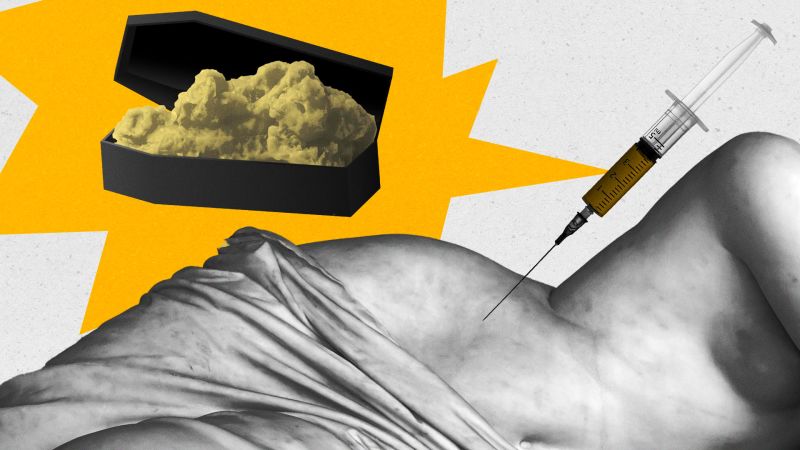
The Telegraph
Drop-dead gorgeous: Cosmetic surgery’s gruesome cadaver fat trendRead it where it was published
A death pun, a horror word and a trend with no count: you flinch before you learn the product is not FDA approved and lacks long-term studies. Disgust does the judging; the clinical questions wait in paragraph 13.
On October 31 The Telegraph headlined AlloClae, an injectable made by Tiger Aesthetics from processed donated human fat, as a “gruesome cadaver fat trend”. The only usage figure is the maker’s: more than 2,000 patients from May 2025 to July 2026.
What they said
On October 31, 2026, The Telegraph published a feature on AlloClae, a cosmetic injectable made by Tiger Aesthetics from processed fat donated by the dead, which the company says more than 2,000 patients received between May 2025 and July 2026.
CNNJul 13, 2026
GLP-1s are shrinking bodies. Cadaver fat is plugging the gap
Read it where it was publishedThe WeekApr 7, 2026
AlloClae: The ‘zombie filler’ trending in cosmetic surgery
Read it where it was publishedThe TelegraphCaitriona Ryan, consultant dermatologist and clinical professor at University College DublinOct 31, 2026
“Scientifically, the technology is much more sophisticated than simply injecting fat cells from a deceased person”
Read it where it was publishedThe TelegraphCaitriona Ryan, consultant dermatologist and clinical professor at University College DublinOct 31, 2026
“unlike hyaluronic acid fillers, these products cannot simply be dissolved if complications occur”
Read it where it was publishedMTF BiologicsMTF Biologics (maker of Renuva), product page
“Renuva® is an off-the-shelf alternative to autologous fat transfer.”
Read it where it was published
“Drop-dead gorgeous” A death pun opens the line on Halloween. Before any fact arrives, the reader is set to hear a medical product as a ghost story.
“gruesome” The hard word: a harsh name for a plain thing, donated fat processed into a product. It is in the headline and nowhere in the article text as syndicated on Yahoo.
“trend” No count in the headline. The only figure sits in the third paragraph and belongs to the seller: Tiger Aesthetics says more than 2,000 patients, May 2025 to July 2026.
“‘zombie filler’” The Week had the horror nickname in April. Its own text calls the product FDA compliant, which it says is not quite the same as FDA approved.
“cannot simply be dissolved” The real clinical risk, from the paper’s own expert: if something goes wrong, there is no undo. The horror word stands in front of this line.
“off-the-shelf alternative” A maker’s words for a similar donor-fat product: a shelf item replacing a patient’s own fat. No horror, and no evidence either. It is a sales line.
The analysis
Eight words, three moves: a pun on death, a horror word, and a trend with no number. The page under it is quieter. It opens on one patient, Lauren Huizar, 31, of Los Angeles, and the only figure arrives in the third paragraph, from the maker: more than 2,000 patients in 14 months. One vivid case stands in for how often it happens, and the base comes from the company selling it. The tell is the trend whose only count is the seller’s.
“Gruesome” is the hard word, the harsh name for a plain thing. The article’s own expert, Prof Caitriona Ryan, calls the “cadaver fat injections” label sensationalist. The questions that matter sit lower down: the 13th paragraph says AlloClae is regulated by the FDA but not FDA approved, and is not under the same rules as Botox or breast implants. Ryan warns long-term studies on complications are lacking, and the complication reports come from Reddit and RealSelf posts the paper calls “ostensibly from patients”.
Disgust aims at the source of the fat. The risk lives in the evidence. A reader who flinches at “cadaver” can finish the headline sure of a verdict and never reach the line that the product cannot be dissolved. The horror and the sale share one page: the surgeon quoted most is an early adopter charging $2,500 a syringe. Either way, the reader leaves with the product’s name and no count beyond the maker’s.
The money. Dr Joubin Gabbay, the surgeon quoted most, treats several patients a week with AlloClae at $2,500 for each 12.5cc syringe. MTF Biologics sells its similar Renuva in 1.5cc and 3cc units.
The timing. The Telegraph ran it on October 31, Halloween. The Week’s “zombie filler” headline ran April 7, CNN’s “Cadaver fat” July 13. Renuva, a similar product, launched about a decade ago.
The calendar
From the book
The Vividness Virus
One named patient in Los Angeles opens the story and the word “trend” carries the scale, while the only count, the maker’s 2,000, waits in the third paragraph.
Chapter 9, The Cognitive Cascades
Loaded Language: Emotive Framing
“Gruesome” and “cadaver” judge a donor-tissue product before the reader learns it is unapproved and untested long-term, so the verdict arrives as disgust instead of evidence.
Chapter 23, Linguistic Hacks
Your move
- The Master Question: you are being made to feel disgust, with a Halloween shiver on top. Why now? A horror word travels on October 31. Real facts are boring: not FDA approved, no long-term studies, cannot be dissolved.
- Does it touch you? If you are weighing a filler or fat transfer, it asks for a plan: what is approved, what is studied, what happens if it fails. If not, it is weather: watch it pass without bleeding or feeding.
- Your nudge: name which word pulled first, “gruesome” or “gorgeous”, and which belief it pressed on: about the dead, about bodies, about people who pay for beauty. The same line repels one reader and dares another; question your own side too.
Sources The TelegraphThe Telegraph (via Yahoo News)CNNThe WeekMTF Biologics