
Rebel News headline turns residential schools into a question
Rebel News
DEBATE: Was Canada’s residential school system genocide? The conversation left-wing students tried to silenceRead it where it was published
The question mark puts a documented atrocity up for grabs, and ‘left-wing students’ hands you a camp to blame for one person’s water bottle. Your outrage, either way, lands on a page with a donate button.
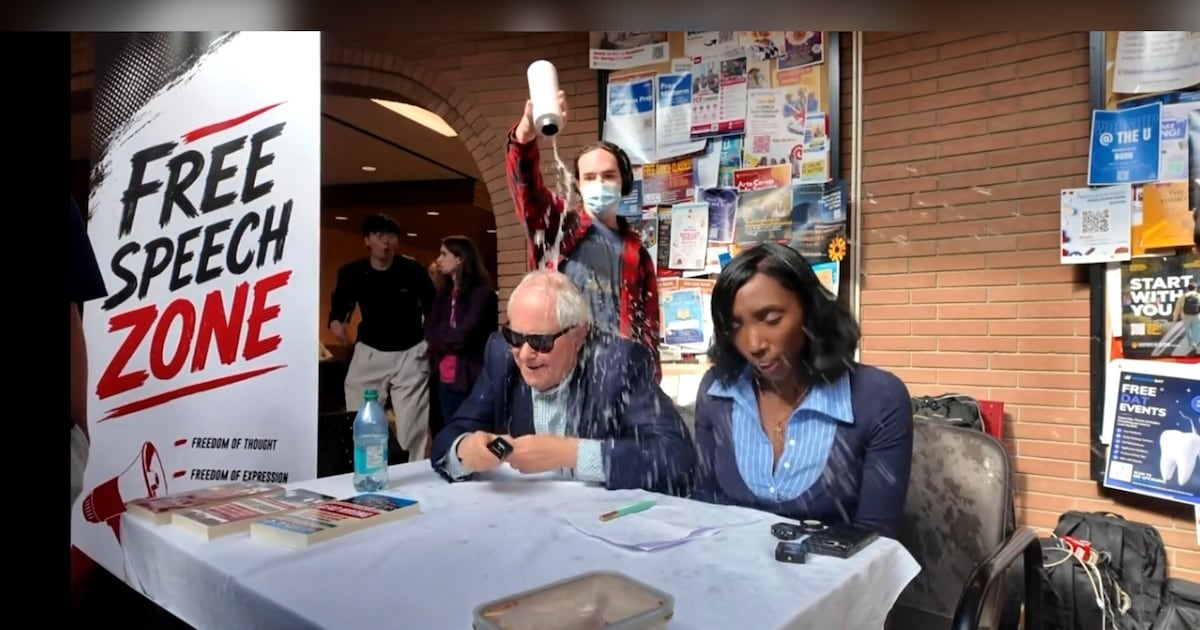
On October 12, Rebel News posted highlights of a September 29 University of Calgary table where its reporter Drea Humphrey and professor emeritus Tom Flanagan debated students on genocide, until a masked person poured water on Flanagan.
What they said
On September 29, 2026, Tom Flanagan and Rebel News reporter Drea Humphrey debated students at a University of Calgary table on whether residential schools were genocide, until a person poured water on Flanagan; police released the person without charges.
Rebel NewsOct 8, 2026
WATCH: U of C students debate Tom Flanagan and Drea Humphrey on residential school 'genocide' — until masked person attacks
Read it where it was publishedCTV News / CP24Oct 2, 2026
UCalgary residential schools debate draws criticism from Indigenous students
Read it where it was publishedCTV News / CP24Mizze Walker, Indigenous University of Calgary student, on the water incidentOct 2, 2026
“That was not us”
Read it where it was publishedCTV News / CP24William Diaz-Berthiaume, national campus coordinator, Canadian Students for Free SpeechOct 2, 2026
“No one is denying that residential schools were an atrocity, and that children were cruelly separated from their family, and many raped and abused”
Read it where it was publishedThe TyeeTruth and Reconciliation Commission (final report, as quoted by The Tyee)Oct 12, 2026
“The practice was not to send the bodies of students who died at schools to their home communities”
Read it where it was publishedRebel NewsDrea Humphrey, Rebel News B.C. Bureau Chief and one of the two debatersOct 12, 2026
“These are the discussions that those who resort to intimidation rather than debate seemingly don't want Canadians to have, especially when the truth is not on their side.”
Read it where it was published
“Was Canada’s residential school system genocide?” The question that asserts: it plants a doubt without owning a claim. The doubt sits on one word, then slides onto a record of at least 3,200 documented deaths.
“left-wing students” A camp named where one person acted. Rebel’s own story never says ‘left-wing’, and police describe one individual, released without charges. The word picks your culprit before you read.
“tried to silence” The verdict arrives as a settled fact. Rebel’s own fourth paragraph says the debate ran roughly 90 minutes before the water. The protesters become censors; the debaters become the silenced.
“'genocide'” Four days earlier the same outlet put the word in scare quotes. The quote marks sneer at the word before any argument is reported, so the later question already leans one way.
“No one is denying” The organizer’s own words set the atrocity outside the debate. The headline leaves that line out, so the reader meets the whole system as an open question.
“seemingly” One soft word carries a hard claim: that the other side fears the truth. The hedge lets a motive be stated with no evidence and no owner.
The analysis
The headline opens with a question it never answers: ‘Was Canada’s residential school system genocide?’ A question that asserts plants a doubt without having to defend it. The doubt lands on the label, and a reader carries it to the record behind it. That record is not a question. The Truth and Reconciliation Commission’s 2015 final report documented at least 3,200 student deaths and found the bodies were usually not sent home. The event’s own organizer told CTV that no one is denying the schools were an atrocity.
The second sentence names a culprit: ‘left-wing students’. Rebel’s own story never uses those words. Its first paragraph blames ‘a masked, trans-identifying individual’ for the water, and its fourth says the debate ran roughly 90 minutes before that. Calgary police describe one individual who hurt no one and was released without charges. The Indigenous students who protested told CTV, in Mizze Walker’s words, ‘That was not us.’ The tell is the group named where one person acted.
The line hands its readers the proof they were already looking for: anyone who believes campuses silence one side gets a headline, and a video of water over a professor’s head, that confirms it. What it leaves out is Flanagan’s place in this fight. Rebel’s own October 8 page names him co-editor of Grave Error, a book the Union of British Columbia Indian Chiefs linked in 2024 to residential school denialism. The past becomes ‘the conversation’, and its defenders arrive as the censors.
The money. The page carries a donation appeal and promotes ticketed Q&A nights with Ezra Levant and Drea Humphrey. Humphrey wrote the page and was one of the two debaters: reporter, subject and ticket in one.
The timing. The table stood on September 29, the eve of the National Day for Truth and Reconciliation. Rebel’s October 12 page calls that ‘last week’, the day CBC and The Tyee ran denialism stories.
The calendar
- Sep 29, 2026Flanagan and Humphrey debate at a UCalgary table; water is poured
- Sep 30, 2026National Day for Truth and Reconciliation
- Oct 2, 2026CTV reports criticism from Indigenous students
- Oct 6, 2026CTV Calgary reports a campus protest
- Oct 8, 2026Rebel posts the full video, ‘genocide’ in scare quotes
- TodayRebel posts highlights under the ‘tried to silence’ headline
From the book
The Leading Question: Socratic Steering
The headline puts the genocide question to the reader as if the record were open, and its second sentence supplies the answer it wants: whoever objects is silencing the conversation.
Chapter 23, Linguistic Hacks
Righteous anger (Moral Outrage for Good and Profit)
Indignation at a silenced debate sits on a page with a donation appeal and tickets to a live Q&A with the debater herself, so the outrage arrives with somewhere to go.
Chapter 15, The Gold Mine
Your move
- The Master Question: this is built to make you feel indignation, at students cast as censors or at a debate over dead children. Why now? Two weeks after the National Day for Truth and Reconciliation. Ask why they need your anger.
- Does it touch you? Unless you sit on that campus or in that fight, it changes nothing you will do this week. It is weather: watch it pass without carrying it into your evening or performing it for anyone.
- Your nudge: name the word that pulled you, ‘genocide’, ‘left-wing’ or ‘silence’, and the belief it pressed on. Someone on the other side felt the same headline push them the opposite way. Question your own side too.
Sources Rebel News2CTV News / CP24CTV News CalgaryThe TyeeCBC News Canada