
OpIndia calls Bar and Bench’s scripture question a ‘meltdown’
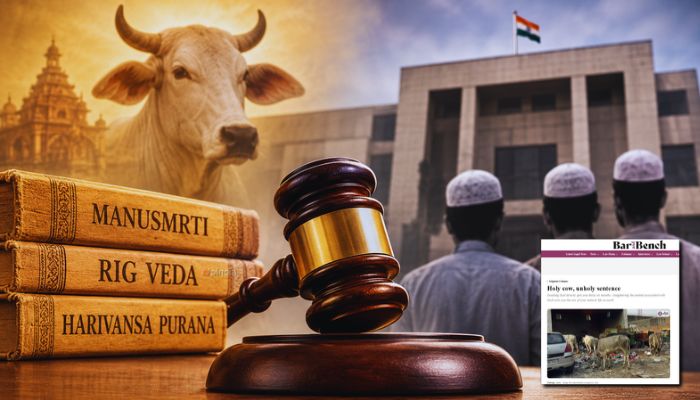
OpIndia
Bar and Bench suffer meltdown over Gujarat court citing Manusmriti and Vedas while awarding life sentences to three Muslims for cow slaughter: Here’s why the statutory maximum in the Kalol case does not mean enforcement of a “theological code”Read it where it was published
‘Meltdown’ turns a lawyer’s question into a tantrum, so you laugh at the critic before you weigh the sentence. A true point about the statute then carries the judge’s scripture past you unexamined.
A Gujarat judge cited the Vedas and Manusmriti on October 26 while sentencing three men to life for cow slaughter. After Bar and Bench questioned the order, OpIndia headlined on November 2 that the column was a ‘meltdown’.
What they said
On October 26, 2026, a sessions judge in Kalol, Gandhinagar district, sentenced three men to life imprisonment for cow slaughter under Gujarat’s animal preservation law and cited Hindu scriptures in the order.
Bar and BenchRitwik Choudhury, author of the Bar and Bench columnOct 30, 2026
“One is left to wonder whether the judge was presiding over a criminal sessions court or sitting as an ecclesiastical tribunal enforcing a theological code.”
Read it where it was publishedThe Wire (India)Additional Sessions Judge Brijeshkumari Rameshwar Singh Rajput (in the order, as quoted by The Wire from an Indian Express report)Oct 26, 2026
“According to the Vedas and Hindu religious scriptures, when drops of nectar from Lord Brahma's mouth fell on the earth through penance, the Surabhi cow appeared. She is considered the mother of all bovine beings”
Read it where it was publishedBar and BenchGujarat Animal Preservation (Amendment) Act, 2017, Section 8(2) (as quoted by Bar and Bench)Jan 1, 2017
“which shall not be less than ten years but which may extend to imprisonment for life.”
Read it where it was publishedThe Wire (India)Harsh Sanghavi, Deputy Chief Minister of GujaratOct 29, 2026
“This verdict under the Gujarat Animal Preservation Act is a clear message that the law will never spare those who commit cow slaughter in Gujarat”
Read it where it was publishedLiveLawOct 29, 2026
'If Not Punished, Gau Mata Will Go Extinct': Gujarat Court Awards Life Term To 3 In Cow-Slaughter Case; Cites Manusmriti, Vedas
Read it where it was publishedScroll
Gujarat court cites Vedas, Manusmriti while sentencing three Muslim men to life for cow slaughter
Read it where it was published
“meltdown” The hard word: a column that asks a question becomes a collapse. The word appears nowhere in Bar and Bench’s column. You judge the critic’s temper before you hear the argument.
“statutory maximum” True, and the column says so too. The law sets 10 years to life. “Maximum” names the ceiling and leaves out that the judge chose to reach it.
“does not mean enforcement of a “theological code”” The quote marks turn the column’s question into a charge the headline can deny. Denying a charge nobody made is easier than answering the one that was.
“One is left to wonder” The column’s own hedge. It wonders aloud and makes no finding, and it accepts that the three men “broke that law.”
“According to the Vedas and Hindu religious scriptures” The judge’s own words put scripture inside a sentencing order. The headline argues about the statute; the order also argued from the Vedas.
“may extend to imprisonment for life” “May”: life was allowed, not required. Anywhere from 10 years to life was open, and the choice belonged to the judge.
The analysis
The headline has two halves. The first, “Bar and Bench suffer meltdown”, reports how a critic feels. The second makes a legal point: life was within the law. The hard word comes first, so by the time the argument arrives, the critic is already hysterical. Bar and Bench’s column never melts down. It accepts the men “broke that law” and raises “theological code” as a question. The tell: when a headline reports an opponent’s temper instead of their words, the argument is being skipped.
The legal half is accurate and partial. Section 8(2) sets 10 years to life, and the column says that too. What the headline cannot hold is why the judge chose the top of the range. The order cited the Vedas and warned “Gau Mata will become extinct from the earth.” Bar and Bench reports that pleas of youth (one man was 19), poverty and no prior convictions were dismissed “in a single breath.” OpIndia’s own page reaches the extinction line only in its 17th paragraph.
For a reader who already sees such critics as hostile to Hindu faith, the line hands over the proof they were looking for, and the true point about the statute carries the scripture past unexamined. The faith is not what is on trial here. The use of it is: a sentencing order that reasons from scripture, and a headline that defends the order by laughing at the person who asked. Three men are serving life.
The words. ETV Bharat’s headline says “Three”. OpIndia says “three Muslims”, Scroll “three Muslim men”. The faith in those headlines is the convicted men’s; the scripture in the order is the judge’s.
The history. In 2005 a seven-judge Supreme Court bench upheld Gujarat’s ban on farm economics, not sanctity, per Bar and Bench. In January 2023 a Tapi court’s cattle life sentence went to the High Court on proportionality.
From the book
Presence gaslighting
“Meltdown” paints a calm legal column as a fit of temper, so its question about scripture in a sentencing order reads as madness rather than as a point to answer.
Chapter 13, The Halo Effect
Loaded Language: Emotive Framing
One charged label in the first four words does the work an argument would have to do, and the sneer quotes around “theological code” finish it.
Chapter 23, Linguistic Hacks
Your move
- The Master Question: this is built to make you feel contempt, the small pleasure of a rival losing its temper, a week after the critics spoke. Contempt closes an argument early. Ask what your pride, or your outrage, conceals.
- Does it touch you? If you live in Gujarat, keep cattle or trade meat there, a 10-years-to-life range is a fact to plan around. If not, it is weather: watch it pass without bleeding or feeding.
- Your nudge: name which word pulled first, “meltdown”, “Muslims” or “Vedas”, and which belief it pressed on: about faith, about courts, about critics. The same line pulls two readers opposite ways; question the side you are on too.
Sources OpIndiaBar and BenchETV BharatThe Wire (India)LiveLawScrollIndian Kanoon