
Newsweek turns an Army burial drill into ‘mass graves’
Newsweek
US Army starts practicing digging mass battlefield gravesRead it where it was published
Two words, “mass” and “graves”, over a dug trench: you see a war’s dead before you learn the remains were skeletal models. The dread arrives first, and the missing word “temporary” never catches up.
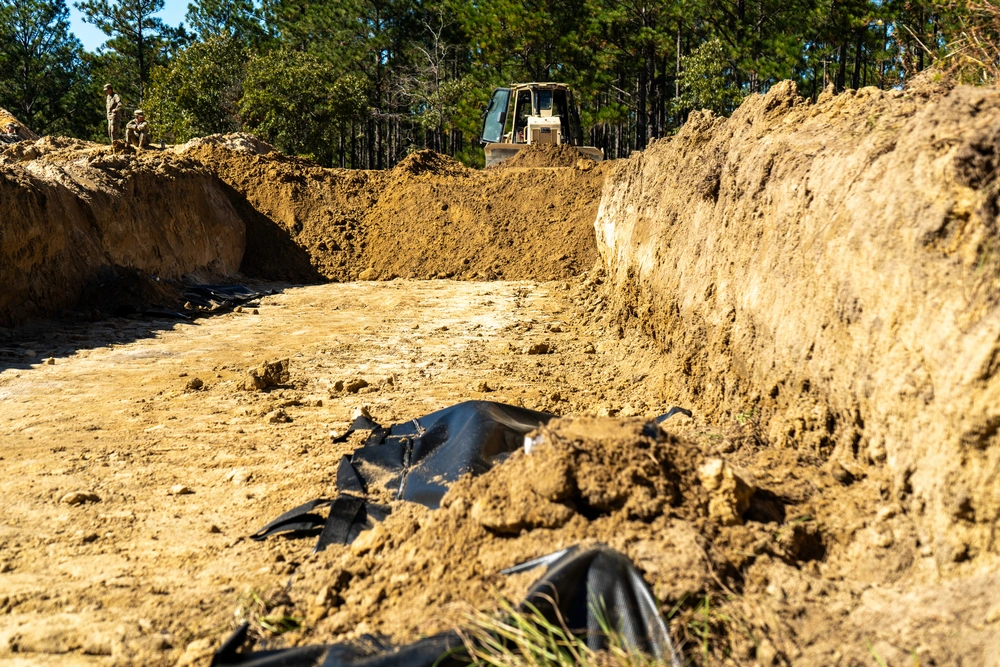
On October 20 and 21, Army units at Fort Bragg used bulldozers and mock remains to test temporary battlefield burial. On October 29, five days before the midterms, Newsweek headlined it as “mass battlefield graves”.
What they said
On October 20 and 21, 2026, Army units at Fort Bragg, North Carolina, used bulldozers and mock remains to test temporary battlefield burial in Phase II of Operation Dragon Covenant.
U.S. Army (DVIDS release, 3rd Corps Sustainment Command)Oct 22, 2026
Army Tests Battlefield Temporary Interment to Validate Remains Preservation and Future Repatriation
Read it where it was publishedArmy Times / Defense NewsOct 26, 2026
US Army practices digging temporary battlefield graves
Read it where it was publishedThe Daily CallerOct 27, 2026
Army Bringing Rapid Burial Training At Stomach-Turning Rate Not Seen Since Korean War
Read it where it was publishedSoap Central (syndicated on AOL)Oct 30, 2026
Donald Trump brings back mass burial drills for the US Army, something not seen since the Korean War
Read it where it was publishedArmy Times / Defense NewsLt. Col. Ruska, chaplain, 3rd Corps Sustainment CommandOct 26, 2026
“The consensus was that by consecrating the site before remains are placed in the ground reassures families that their loved ones are treated with reverence, dignity and honor despite the inability to provide a memorial ceremony in a contested combat environment.”
Read it where it was published
“starts practicing” The Army calls this Phase II of a test, with Phase III planned for spring 2027. “Starts” makes a step in a study read like the first move toward something.
“mass battlefield graves” “Temporary” is gone. The trenches were dug so forensic teams could later recover the remains; without that word, a plan for recovery reads as a final pit.
“Temporary Interment” The Army’s own term is a soft word: Latin for burial, with the dead and the war that would make them left outside the sentence.
“Stomach-Turning” A body word in the headline tells you how to feel before you learn the remains were skeletal models and water containers.
“Donald Trump brings back” The release credits the 3rd Corps Sustainment Command. The headline puts a president in the doer’s seat, and the drill becomes his act.
“reassures families” The chaplain’s blessing is offered as the answer to having no funeral. The faith is put to work as comfort for a burial with no ceremony.
The analysis
Newsweek’s sentence has two words the Army’s account does not use: “starts” and “mass”. The release calls the October 20 and 21 dig at Fort Bragg a test of concept, and Army Times reports Phase III is planned for spring 2027. The graves are “temporary interment”, dug so forensic teams could later recover what lay in them. Drop “temporary” and a plan for recovery reads as a final pit. The tell is the dropped qualifier: one word gone, and the same fact means something else.
The page does it again lower down. Army Times reports 1 hour 15 minutes to dig one trench for 20 remains; Newsweek says soldiers filled each plot, five trenches holding 100, in that time. The 2,400 a day figure arrives without its condition, “if operating nonstop”. The mock skeletons are missing, and so is the flaw the test found: seven feet between rows was too narrow for a bulldozer. The bulldozer picture does the rest: one vivid image stands in for a scale no one measured.
The same knife cuts the Army’s words. Its headline speaks of “Remains Preservation and Future Repatriation”, soft words that keep the dead out of a sentence about burying them. The Daily Caller called the pace “Stomach-Turning”. Soap Central wrote “Donald Trump brings back” and set the drill beside CNN and Fox reports on possible action against Iran. Two facts side by side, and the reader supplies the link. The record shows a drill with model skeletons; none of these headlines shows a war plan.
The words. Newsweek’s body text says “temporary internment plot”. Internment is the word for detention; interment is the word for burial. One letter moves a grave toward a camp.
The timing. The dig ended October 21. Newsweek ran it October 29, Soap Central October 30 beside Iran reports, days before the November 3 midterms. The dates sit together; nothing in the record shows they were set together.
The calendar
- Oct 20, 2026Phase II begins near St. Mere Eglise Drop Zone; chaplain blesses the site
- Oct 21, 2026D6 bulldozer fills a simulated trench
- Oct 22, 2026Army release: “Temporary Interment”
- Oct 26, 2026Army Times: “temporary battlefield graves”
- Oct 27, 2026Daily Caller: “Stomach-Turning Rate”
- Oct 29, 2026Newsweek: “mass battlefield graves”
- TodaySoap Central on AOL: “Donald Trump brings back”
- Nov 3, 2026US midterm elections
From the book
The Narrative Frame
One dig, four frames: “temporary interment” for the Army, “mass battlefield graves” for Newsweek, “Stomach-Turning” for the Daily Caller, Trump’s act for Soap Central. The facts underneath stay the same; the feeling changes with the frame.
Chapter 9, The Cognitive Cascades
Correlation presented as revelation
Soap Central places a burial drill next to reports of possible action against Iran and never states a link. The reader builds the war from the two facts alone.
Chapter 10, The Enemy's Gift
Your move
- The Master Question: you are being made to feel dread, the dead of a war before there is a war, four days before an election and beside talk of Iran. Fear is useful to whoever offers the exit. Ask what your fear would enable.
- Does it touch you? If someone you love serves, the drill is about them, and the plan is to know what doctrine says and what the Army changes next. If not, it is weather: watch it pass without carrying it into your evening.
- Your nudge: name the word or picture that pulled, “mass”, “Stomach-Turning”, the bulldozer, the president’s name. Name which belief it pressed on: about this government, this war, this press. The same line pushes someone else the other way.
Sources NewsweekU.S. Army (DVIDS release, 3rd Corps Sustainment Command)Army Times / Defense NewsThe Daily CallerSoap Central (syndicated on AOL)