
GB News calls a Bangladeshi party clash an Islamic war
GB News
Exposed: The sectarian Islamic mobs waging war on Britain’s streetsRead it where it was published
Three words do the work: a faith, a mob, a war. You feel your country under attack before you learn it was one road, two Bangladeshi parties and three hospital trips, and every campaign built on that fear gains a picture.
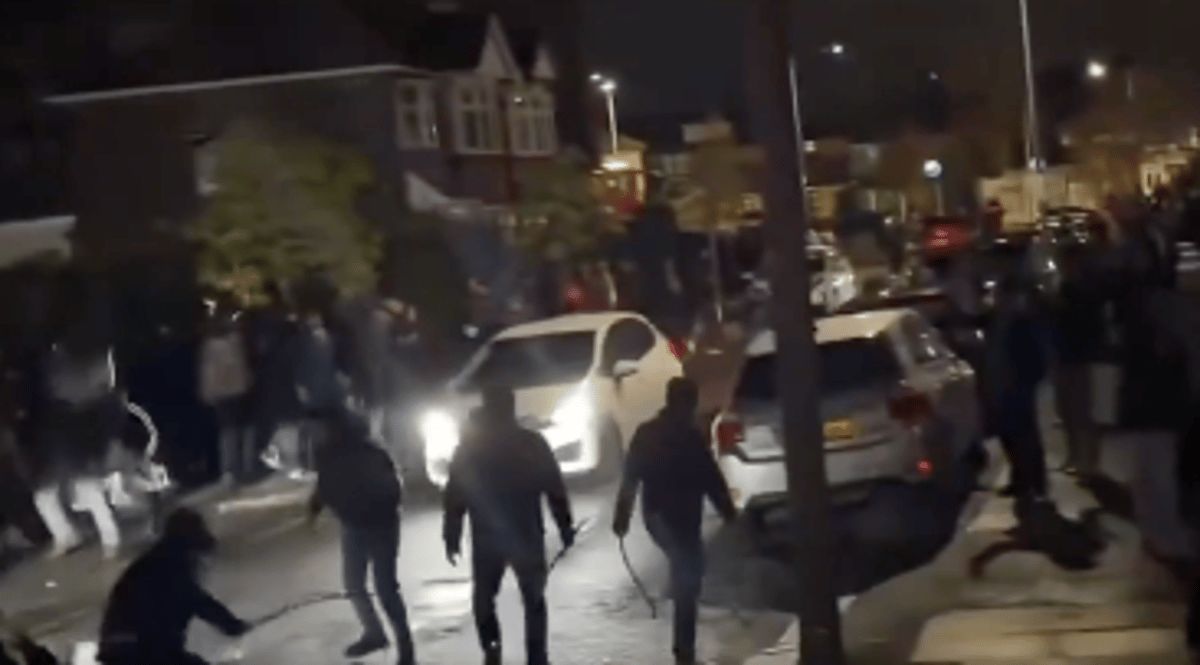
On November 16, about 50 men clashed outside a Bangladeshi party leader’s reception in Chadwell Heath, east London; police said three went to hospital. On November 19, GB News headlined ‘sectarian Islamic mobs waging war on Britain’s streets’.
What they said
On the night of November 16, 2026, about 50 men clashed on High Road, Chadwell Heath, east London, outside a reception for Bangladeshi National Citizen Party leader Nahid Islam; police said three people were taken to hospital, and as of November 19 no arrests had been made.
The Havering DailyNov 17, 2026
BREAKING: Six Treated After Violent Clashes Erupt at Chadwell Heath Political Event
Read it where it was publishedRomford Recorder
High Road, Chadwell Heath- 50-man protest erupts into violent disorder
Read it where it was publishedEvening Standard (via Yahoo News UK)Nov 17, 2026
Running battles erupt in London between rival Bangladeshi groups leaving six injured
Read it where it was publishedEvening Standard (via Yahoo News UK)Metropolitan Police spokesmanNov 17, 2026
“It is understood that a group of around 50 men were taking part in protest before violent disorder occurred.”
Read it where it was publishedEvening Standard (via Yahoo News UK)Zia Yusuf, Reform UK home affairs spokesmanNov 17, 2026
“Bangladeshi men have caused CHAOS on the streets of East London as a result of political disputes in Bangladesh.”
Read it where it was publishedGB NewsBangladesh Ministry of Foreign AffairsNov 19, 2026
“The Government strongly condemns these acts of violent terrorist activities against Bangladeshi citizens in the United Kingdom.”
Read it where it was publishedGB NewsNahid Islam, National Citizen PartyNov 19, 2026
“fugitive and extremist activists of the fascist Awami League”
Read it where it was published
“sectarian Islamic mobs” Sectarian means split by sect. GB News’s own second paragraph describes supporters of “two rival political factions in the South Asian nation.” The headline puts a faith where a party quarrel stood.
“waging war” A war needs an enemy nation. The Met wrote “violent disorder”: three people taken to hospital, injuries not life-threatening, no arrests as of November 19.
“Britain’s streets” One road in Chadwell Heath on one night, November 16, becomes the whole country’s streets, plural. The line carries no town, date or count a reader could check.
“Running battles” The Evening Standard reaches for battle too. Its line still names London, “rival Bangladeshi groups” and a count, six injured, that a reader can hold against the event.
“political disputes in Bangladesh” Reform UK’s home affairs spokesman used the clash against immigration policy, and still called it political. His sentence names a country and its politics, not a faith.
“violent terrorist activities” Bangladesh’s foreign ministry makes the mirror move: a street clash becomes terrorism, the rival party “the ousted regime”. Each side hands its readers a verdict word before any charge.
The analysis
The line has no town, no date and no count. It has a faith, a crowd word and a war. GB News’s own page is plainer: its web address reads “bangladeshi-mobs-waging-war-britains-streets”, its third line speaks of “warring Bangladeshi groups in London”, and its second paragraph names Chadwell Heath, “Around 50 men” and “two rival political factions in the South Asian nation.” Between the address and the headline, a nationality became a religion and a party quarrel became a war on Britain.
The Met’s account is duller. Officers were called at 9:59 PM London time on Monday, November 16, to High Road, where about 50 men at a protest outside a reception for Nahid Islam, leader of Bangladesh’s National Citizen Party, fell into violent disorder. Three people went to hospital, injuries not life-threatening; London Ambulance Service treated six at the scene. As of November 19, no arrests, and police were reviewing footage. Where police wrote “disorder”, the headline uses the hard word, “war”.
The headline rides us and them: a few men from the other group stand for a whole faith, while a brawl by our own would be a few bad men. The tell for the next headline is a faith or a people named where a group with a name acted. Here the names were public. Nahid Islam and Bangladesh’s government blame Awami League supporters; the police statements in the coverage do not say who started it. Within a day, Reform UK’s Zia Yusuf had made it a verdict on “mass immigration”.
The words. “Exposed:” promises a hidden truth. GB News published November 19, two days after the Evening Standard and The Havering Daily carried the Met’s count and ambulance figures. What the headline adds is the faith.
The timing. Between 9:02 PM on November 19 and 6:23 AM on November 20 UK time, GB News also headlined “Afghan migrants” and a council “accused of trying to ‘erase’ Christmas”.
From the book
The six stages of villainization (From Humans To Monsters)
GB News’s own web address stops at Identification, “bangladeshi”. The headline jumps to Essentialization and Threat Assessment: a faith as the actor, its men as “mobs”, their aim as war on Britain.
Chapter 10, The Enemy's Gift
The law of power on villains
The enemy is redefined in one line: two Bangladeshi parties’ supporters become Islam against Britain, and Reform UK’s spokesman turns the night into a charge against “mass immigration from the Tory and Labour parties”.
Chapter 10, The Enemy's Gift
Your move
- The Master Question: you are being made to feel fear with an edge of anger: a faith at war on your street. Why now? A war calls for defenders. What does your fear enable, and whose case does it make?
- Does it touch you? If you live near High Road, the facts are three in hospital, no arrests as of November 19, police reviewing footage. If not, it is weather: watch it pass without bleeding or feeding.
- Your nudge: name which word pulled hardest, “Islamic”, “mobs” or “war”, and which belief it pressed on. A reader on another side may be pulled by “fascist” or “terrorist” instead. Question the side you are on too.
Sources GB News23Evening Standard (via Yahoo News UK)The Havering Daily2Romford RecorderDhaka Tribune