
Futurism makes a Sierra Club forecast a settled loss
Futurism
New Data Centers in the US Set to Wipe Out 15 Years of Greenhouse Gas ReductionsRead it where it was published
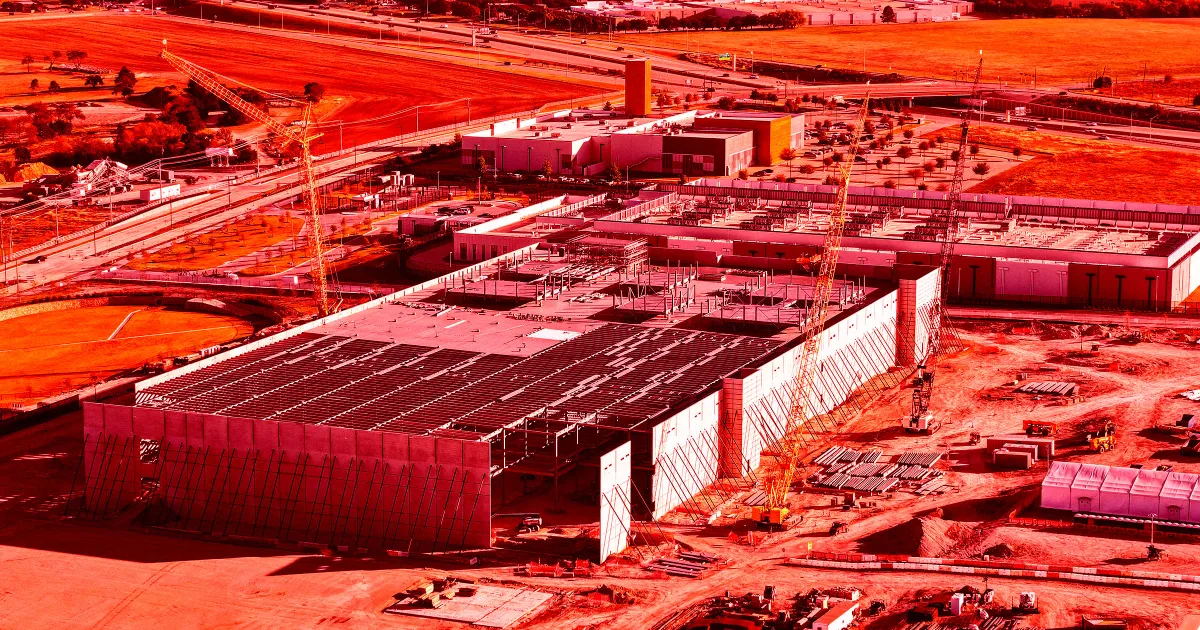
Two words, “Set to”, turn one group’s forecast into a timetable, and the red-tinted picture finishes the job. You feel the loss as already booked, two days before ballots where towns still get a say.
On November 1 Futurism headlined that new US data centers are “Set to Wipe Out 15 Years” of emissions cuts. The figure is an internal Sierra Club projection for 2030 that assumes planned projects get built.
What they said
On October 28, 2026, Bloomberg reported an internal Sierra Club analysis projecting US power-sector emissions of 2.1 billion metric tons of CO2 in 2030, about 42% above 2025, if planned AI data centers are built.
BloombergOct 28, 2026
New US Data Centers Projected to Emit More Carbon Than All of Mexico
Read it where it was publishedYahoo News
AI Data Centers Could Erase 15 Years of America’s Climate Progress by 2030
Read it where it was publishedInsurance Journal (Bloomberg syndication)Brendan Pierpont, director of electricity at Energy InnovationOct 29, 2026
“But it’s not a foregone conclusion that that’s going to happen.”
Read it where it was publishedNPRNov 1, 2026
Politics chat: Data centers are on everyone's minds going into Election Day
Read it where it was publishedTechCrunchNov 1, 2026
Data centers are now a midterm issue, even in Brooklyn
Read it where it was publishedFrance 24Nov 1, 2026
Data centres on the ballot: could the AI infrastructure shape US midterms?
Read it where it was published
“Set to” A timetable phrase. The estimate depends on planned projects opening on schedule, and the headline carries it as an event already booked on the calendar.
“Wipe Out” The hottest verb on the page: total and final. The cuts made since power emissions peaked in 2007 are already made; the estimate is about one later year, 2030.
“15 Years of Greenhouse Gas Reductions” The future is measured in what was already gained, so the reader feels a possession being taken. The 2030 date that would set the scale is missing.
“Projected to” Same estimate, four days earlier, from the outlet that reported it first. Bloomberg’s verb keeps the forecast a forecast.
“not a foregone conclusion” An energy analyst quoted in Bloomberg’s story says the outcome is open. That sentence has no room in a headline that says the loss is set.
The analysis
“Set to” is a timetable word. The figure behind it is an internal Sierra Club analysis, reported by Bloomberg on October 28: US power plants would emit 2.1 billion metric tons of CO2 in 2030, about 42% above 2025, once planned AI projects are counted. Bloomberg links no Sierra Club report and calls the estimate higher than others published so far. The Union of Concerned Scientists projects a 19% to 29% rise by 2035; Rhodium Group’s highest-emission scenario has the sector 24% below 2025 by 2040.
Futurism’s own page says more than its headline. The second paragraph names the Sierra Club, Bloomberg and 2030, and says the estimate assumes planned projects open on schedule. The seventh says the number of projects at risk of cancellation is rising. The tell is a forecast with no owner, no date and no condition. The tense slips: Bloomberg’s “Projected to” becomes “Set to”, could becomes will. And the sentence rides the fear of loss: it counts the 15 years you already have, never what could still be kept.
Bloomberg reports that Oracle warned it might miss the planned 2028 start of its Project Jupiter data center in New Mexico, citing regulatory setbacks and community opposition. The same weekend, NPR, TechCrunch and France 24 put data centers on Tuesday’s ballot, Brooklyn included. In those headlines, voters and towns act. In Futurism’s, the loss is already scheduled, and a reader two days from a vote is handed nothing to do but keep scrolling.
The irony. Jeremy Fisher told Bloomberg that 18 months ago Sierra Club researchers would have put the impact at a quarter to half of today’s figure. A number that moved that much gets one tense: settled.
The timing. Bloomberg ran the estimate as a projection on October 28. Futurism’s “Set to” arrived November 1, 2 days before the November 3 midterms, where NPR says data centers are on everyone’s minds.
The calendar
From the book
The Historical Future (presupposition and temporal distortion)
Chapter 11, The Serpent’s Tongue: the Historical Future. A feared 2030 outcome, conditional on projects being built, is written as already under way, so the conclusion feels settled before the reader reaches the condition in paragraph two.
Chapter 11, The Serpent's Tongue
Learned Helplessness
Chapter 3, The Contract: learned helplessness. A loss written as scheduled leaves no actor and no step, while the same weekend’s ballot coverage shows towns and voters with a say in what gets built.
Chapter 3, The Contract
Your move
- The Master Question: you are being made to feel loss, years of effort undone, and the quiet despair that follows. Why now, 2 days before a vote with data centers on ballots? Ask what your fear enables: here, a scroll instead of a choice.
- Does it touch you? If a data center, a power bill or a local ballot question near you is in play this week, that asks for a plan, not a mood. If not, it is weather: watch it without bleeding or feeding.
- Your nudge: name which pulled harder, “Wipe Out” or “15 Years”, and which belief it pressed on. A reader who welcomes the build-out may feel it harden the other way. Question the pull on your own side too.
Sources FuturismBloombergInsurance Journal (Bloomberg syndication)Yahoo NewsNPRTechCrunchFrance 24