
Daily Star headline on Lens names clashes, not the grenade
Daily Star
Pupil, 15, 'has hand blown off' after clashes with riot police clash in student protestRead it where it was published
A boy loses a hand and the sentence gives it nothing to blame: ‘clashes’ spreads the harm across the whole street. You feel shock with nowhere to aim it, and the grenade stays out of frame.
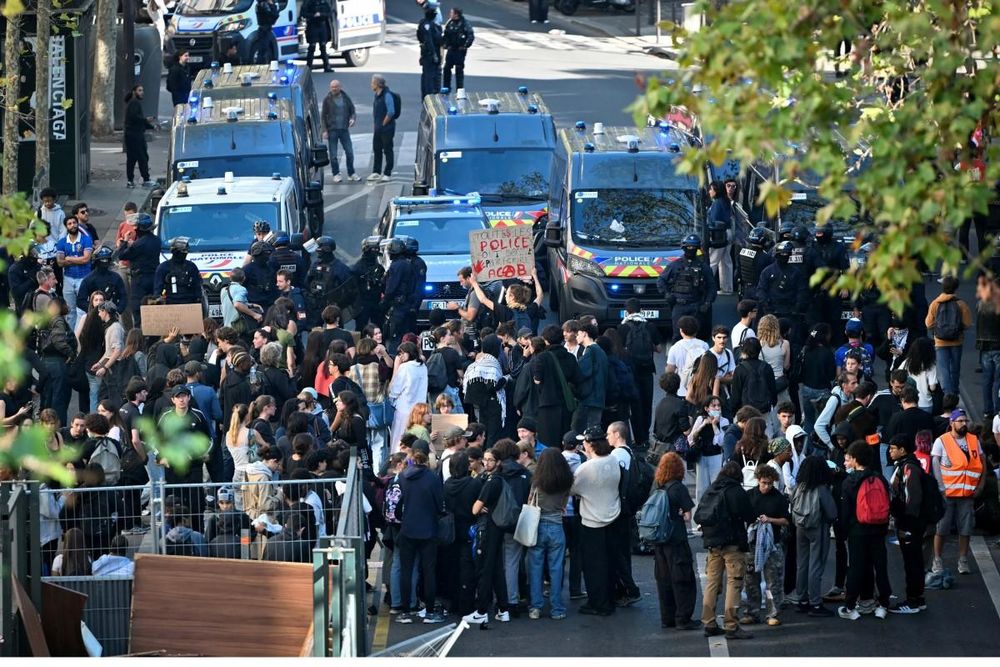
A 15-year-old student at the Béhal high school in Lens, France, lost his hand during school protests on October 5. Other outlets name a police stun grenade. The prefect says an investigation is open.
What they said
On October 5, 2026, a 15-year-old student protesting school conditions in Lens, France, lost his hand; local press and a police union source said he had picked up a stun grenade fired by riot police, and an investigation was opened.
EuronewsOct 5, 2026
Student's hand blown off by police grenade as French school protests continue
Read it where it was publishedIOLOct 5, 2026
France teen protester loses hand picking up police grenade
Read it where it was publishedThe US SunOct 5, 2026
Boy, 15, has 'hand torn off' in riots as school set alight with teachers inside
Read it where it was publishedThe Times of IndiaOct 5, 2026
France school protests: 15-year-old student loses hand in stun grenade incident
Read it where it was publishedBrit BriefFrançois-Xavier Lauch, prefect of Pas-de-CalaisOct 5, 2026
“Unfortunately, and I regret this, we had a high school student who was seriously injured during a demonstration. A 15-year-old student whose hand was torn off. This is a very serious matter.”
Read it where it was publishedBrit BriefBenjamin Lucas, French MPOct 5, 2026
“A child had his hand torn off by a grenade.”
Read it where it was publishedIOL (AFP)Maud Bregeon, French government spokeswomanOct 5, 2026
“When you have 14-, 15-, 16-year-olds who, at 9 am, are burning bus shelters or -- perhaps even more seriously -- the high school where they study, that raises the question of parental responsibility”
Read it where it was published
“hand blown off” The injury sits inside quotation marks, as if it were a disputed claim. The verb has no actor: something blew the hand off, and the sentence does not say what.
“after clashes” ‘After’ gives a time, not a cause. ‘Clashes’ means two sides colliding, so the harm belongs to the whole scene. The grenade, named elsewhere that morning, is absent.
“by police grenade” Three words put a weapon and its owner into the sentence. The reader learns what struck the boy and whose it was.
“picking up” The police are in the sentence, but the verb belongs to the boy. The source for ‘picking up’ is a police union, speaking for the side whose grenade it was.
“in riots” ‘Riots’ delivers a verdict on the protest before any fact arrives. Set beside a burning school, the boy’s hand reads as one more piece of the disorder.
“whose hand was torn off” The state’s representative in Pas-de-Calais speaks in the passive. Regret is stated and the injury is named. The grenade, and whoever fired it, are not.
The analysis
Read the Daily Star line as a sentence. The subject is a pupil, and the only thing he does is have something happen to him. His injury sits in quotation marks, as if it were a claim. The cause offered is ‘clashes’, a word with two sides and no weapon. Euronews, 47 minutes earlier, at 7:02 AM ET, put the doer in three words: ‘by police grenade’. The Irish Independent and LBC did the same. The tell: a word like clashes or incident standing where a weapon should be.
IOL names the grenade and hands the verb to the boy: he ‘loses hand picking up’ it. That rests on a police union source, who said he appeared to have picked up a sting-ball grenade fired by riot police, hoping to throw it back. An early Reuters version put the same claim in the prefect’s mouth, then a correction moved it to the local paper La Voix du Nord. The prefect’s own quoted words say only that the hand ‘was torn off’. No line in the coverage names the officer who fired.
The US Sun places the hand ‘in riots’ and sets it beside a school ‘set alight with teachers inside’. Two facts side by side, and the reader supplies a link the headline never states. The same day, government spokeswoman Maud Bregeon spoke of teenagers burning their own schools and raised ‘parental responsibility’. The power in this story is the state: it holds the grenade, the investigation and the microphone. The boy holds the loss.
The words. One boy, many nouns: ‘Pupil’, ‘Student’, ‘Boy’, ‘teen protester’, ‘Teenager’. MP Benjamin Lucas wrote ‘A child’. Each noun sets how much pity, and how much blame, the sentence can carry.
The timing. On the same Monday, more than 400 of France’s 3,700 lycées were partly or fully closed. Euronews’s page about the boy also describes a bill to dock family benefits over damage.
From the book
The Narrative Frame
One injury, one weapon, one morning. ‘Clashes’, ‘riots’ and ‘incident’ wrap it in disorder; ‘by police grenade’ wraps it in a weapon and its owner. The reader’s verdict follows the wrapping, not the hand.
Chapter 9, The Cognitive Cascades
Correlation presented as revelation
The US Sun sets a lost hand beside a school set alight with teachers inside. Neither fact causes the other, and the headline never says so; the reader’s mind joins them anyway.
Chapter 10, The Enemy's Gift
Your move
- The Master Question: you are being made to feel outrage at the police or unease at the young protesters, depending on which headline reached you first. Blame is being assigned while the investigation is still open. For anger, ask: why do they need my anger?
- Does it touch you? If you have a child in a French school, or a protest on your own calendar, it asks for a plan: where, with whom, how to leave. If not, it is weather. Watch it without carrying it into your evening.
- Your nudge: which word reached you first, ‘clashes’, ‘riots’ or ‘police grenade’, and which way did it move you? Name the belief about police or about teenagers it pressed on. Someone holding the opposite belief felt the opposite pull.
Sources Daily StarEuronewsIrish IndependentLBCReuters (via Yahoo News)93.3 The Drive (Reuters)IOLThe US SunThe Times of IndiaBrit Brief