
Daily Mail headline tells readers to pray for nuclear death
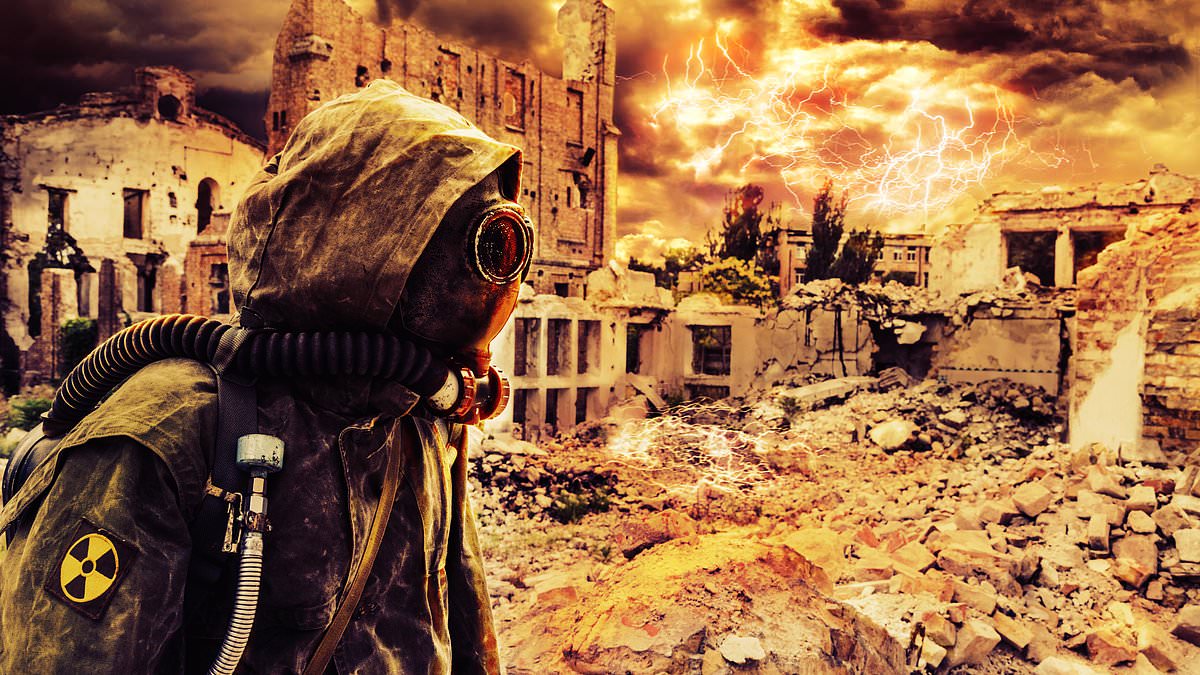
Daily Mail
Why you should pray for death in nuclear war: The sun blotted out. Endless winter. And cannibals rule as the human race starves. MARK LYNAS's meticulously researched book reveals all-too-near horrorRead it where it was published
You feel the cold before any fact arrives: an order to pray for death, then a famine told as if it already happened. Dread with no date and no one to stop it holds you on the page that sells the book.
On October 23 the Daily Mail put back in circulation an April 2025 extract from Mark Lynas’s nuclear-war book under the line “pray for death”. The same day El País ran ICAN director Melissa Parke’s warning on nuclear risk.
What they said
On October 23, 2026, the Daily Mail updated a 2025 serialised extract of Mark Lynas’s book on nuclear war, and El País published an interview with ICAN executive director Melissa Parke on nuclear risk.
El PaísOct 23, 2026
Melissa Parke, ICAN executive director: ‘The risk of nuclear war has never been higher than it is today’
Read it where it was publishedDaily MailMark LynasOct 23, 2026
“Human civilisation is finished, and those who have survived the initial holocaust are about to experience what nuclear winter means.”
Read it where it was publishedDaily MailMark LynasOct 23, 2026
“That a full-scale nuclear war could precipitate a planet-wide deep freeze has been understood since the early 1980s.”
Read it where it was publishedDaily MailMark LynasOct 23, 2026
“As I wrote yesterday, I believe we must confront these realities head-on if we are to replace this fatalism with an activism which can help to reduce the threat.”
Read it where it was published
“pray for death” An instruction, not a fact. It tells you how to feel about a war that has not happened, and makes death the better outcome before the sentence offers a single number.
“meticulously researched” The praise does the proving. The extract under this headline names no study for its 4,000 explosions or its 770 million dead.
“all-too-near horror” A distance with no measure: no probability, no country, no year. The word sits where a number would be, and the page gives none.
“never been higher” The same knife: a superlative with no figure in the headline. The difference is that it has an owner, a named campaigner with an office, and calls it a risk, not a fate.
“is finished” A scenario written as a report: ‘is finished’, ‘have survived’. For nine paragraphs the war has already happened, and the reader mourns a model as if it were news.
“could” The first ‘could’ arrives in the tenth paragraph. Here the claim is careful, a possibility understood since the early 1980s. The headline kept the horror and left this word behind.
The analysis
The headline hands the reader an order before any fact: pray for death. Then three short sentences in the present tense, sun blotted out, endless winter, cannibals rule, as if filed from the scene. The page first says “could” in its tenth paragraph. Until then, 770 million people are written as already killed. That slip from could to is is the device in the words: a scenario told as a report, a feared future given the grammar of the past.
What the headline leaves out is everything that would make the threat something a person can act on: no probability, no country or leader that fires, no study behind the 4,000 explosions, no date. The cannibals come from a narrative section headed ‘After two months’, with no source cited. The worst imaginable case stands in for the whole question, the habit where the bad outweighs everything else. The tell of the doom loop is a threat with no number and no one who could stop it.
The page and the book argue with their own headline. The book’s full title ends ‘How to Avoid It’, and the headline drops that half. Lynas writes in the thirteenth paragraph that he wants to replace ‘fatalism’ with activism that reduces the threat. El País’s headline the same day also makes a large claim with no number in it, but it has an owner, Melissa Parke, and an office, a campaign to abolish the weapons. Fear with an author and an aim reads as policy; fear with neither reads as fate.
The timing. The page reads ‘Published: 21:13 EDT, 26 April 2025’ and updated 7:26 AM EDT on October 23, 2026. An extract 18 months old returns to the feed as today’s horror.
The money. The page sells a click and serialises a Bloomsbury book, Six Minutes to Winter, now in a 2026 trade paperback. When the dread works, both gain a reader; the ‘How to Avoid It’ half stays off the headline.
The calendar
From the book
The Historical Future (presupposition and temporal distortion)
The extract writes a feared outcome as already done, ‘Some 770 million people have been killed’, so the war feels settled before the first ‘could’ appears in paragraph ten.
Chapter 11, The Serpent's Tongue
Learned Helplessness
A headline with no actor, no odds and no exit, ending in ‘pray for death’, trains the reader to feel nothing they do matters, the fatalism the author says his book was written against.
Chapter 3, The Contract
Your move
- The Master Question: you are being made to feel dread, with helplessness under it. Why now? An old extract came back on October 23 with a new date. For fear, ask what your fear enables: here, another click and the sense that nothing can be done.
- Does it touch you? Nothing in your money, work or family changed today because a 2025 extract was redated. If it changes nothing you will do this week, it is weather: watch it pass without carrying the winter into your evening, or performing it for anyone.
- Your nudge: name the word that pulled, ‘pray’, ‘cannibals’ or ‘all-too-near’, and the belief it pressed on: that the end is coming, or that every warning is hype. Each belief makes the headline feel true or false. Question the one you hold.
Sources Daily MailEl PaíseBay