
CNN’s Toledo leak headline gives the error no owner
CNN
‘Error’ caused Toledo chemical leak, EPA says, triggering evacuations and fear of explosionRead it where it was published
Error is the subject, the leak and the fear follow, and no company appears. You get the alarm, then the shrug of an accident, while whoever made the error stays out of the sentence.
A tank of glycidyl methacrylate exploded at MC Tank Transport’s north Toledo terminal on October 20, forcing a 1-mile evacuation. CNN’s headline gives the cause as the Ohio EPA’s word, an “error,” and names no one who made it.
What they said
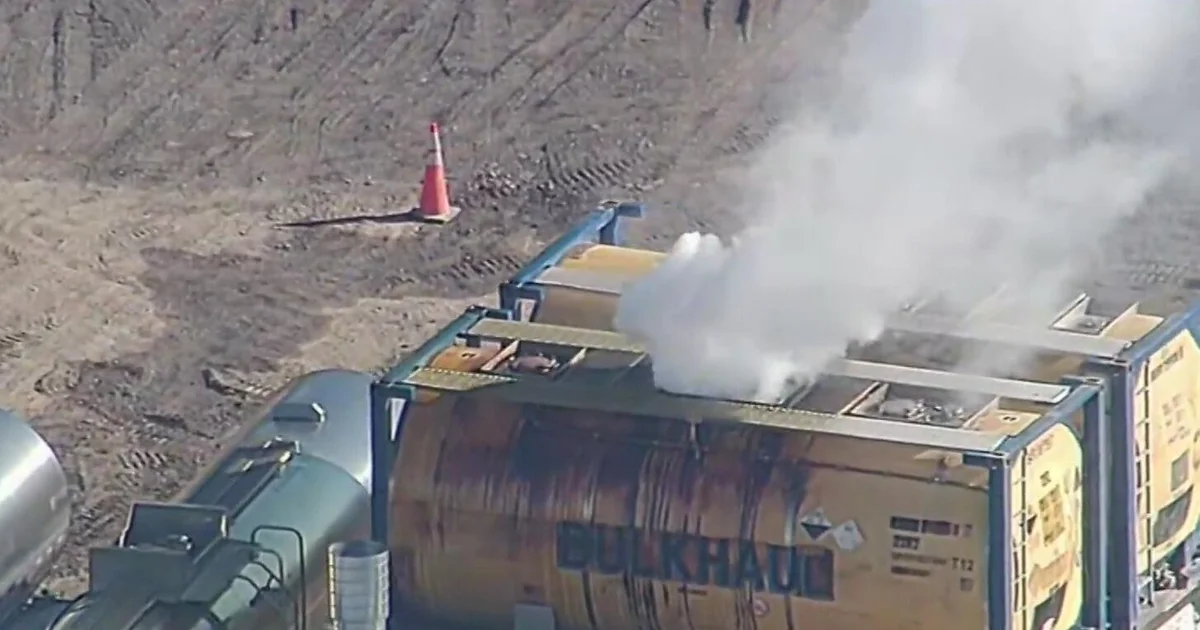
Around 9:30 p.m. on October 20, 2026, a tank of glycidyl methacrylate exploded at the MC Tank Transport terminal in north Toledo, Ohio, and the city ordered everyone within 1 mile to evacuate.
CNNBryant Somerville, spokesperson, Ohio Environmental Protection AgencyOct 21, 2026
“error that occurred when the material was being transferred”
Read it where it was publishedPBS NewsOct 21, 2026
Chemical tank explosion in Ohio of glycidyl methacrylate forces evacuations, prompts fears of another blast
Read it where it was publishedJust the NewsOct 21, 2026
Nearly 1,000 residents of Toledo evacuated after chemical explosion
Read it where it was publishedCBS NewsOct 21, 2026
Chemical leak in Toledo forces hazardous materials evacuation, shelter-in-place orders
Read it where it was published13abc (WTVG)MC Tank Transport Inc. (company statement)Oct 21, 2026
“MC Tank Transport Inc., a subsidiary of The Kenan Advantage Group, Inc., confirms that equipment associated with our operations is involved in the hazardous materials incident on Progress Avenue in Toledo, Ohio.”
Read it where it was publishedPBS NewsWade Kapszukiewicz, Mayor of ToledoOct 21, 2026
“There is still concern that the tank is emitting this chemical and it has the potential within 12 hours of the incident to be explosive”
Read it where it was published
“‘Error’” The headline’s subject is a noun with no owner. An error is something a person or a company makes; the sentence keeps the slip and drops whoever slipped.
“EPA says” The cause rests on one voice, an Ohio EPA spokesperson. On CNN’s page the error bullet cites only the agency; the company appears next only as the source for the chemical.
“fear of explosion” The fear comes with no window. The mayor gave one: the chemical could be explosive within 12 hours of the incident. CNN’s top headline later dropped the explosion for a call to stay indoors.
“error that occurred” The agency’s own phrase is built the same way: the error “occurred,” as rain occurs. No worker, shift, carrier or company is attached to the transfer.
“equipment associated with our operations” The company confirms its link at arm’s length: equipment “associated with” its operations, “involved” in an “incident.” The sentence admits the tank and names no act.
The analysis
Read the CNN headline as a sentence. Its subject is ‘Error’. The error caused the leak, the leak triggered evacuations, and fear follows. Every verb belongs to a thing; no person and no company acts. That is the act with no actor, and it removes the hand at the exact point a reader would ask whose. The frame picks the feeling too: a company’s tank exploding and an error causing a leak describe the same night, and only the second sounds like a slip anyone could make.
The facts sit on other pages. The AP story on PBS names Arkansas-based MC Tank Transport and the chemical, glycidyl methacrylate; 13abc gives a 5,500-gallon tank. Everyone within 1 mile was ordered out; the mayor said more than 900 people live there, and a sheriff’s deputy was injured. About 30 people were evaluated for symptoms. The PBS, CBS and Just the News headlines name no company either, but only CNN’s adds a cause, which makes the missing owner sharper.
No page in the coverage says who made the error, and none gives the tank’s inspection or safety record. On Wednesday morning the mayor said officials did not know the cause; by afternoon the cause was a single noun. The tell is that noun: when a cause arrives as one word like error or incident, ask whose it was. A cause with no owner leaves no one to answer. What to watch is whether any agency names who was doing the transfer.
The words. The company’s statement does the same work in its own voice: its equipment is “associated with our operations” and “involved” in an “incident.” Nobody in the sentence did anything.
The timing. CNN’s headline carried the cause at 2:44 PM ET Wednesday. That morning the mayor had said officials did not know what caused the explosion.
From the book
Diffusion of blame
The harm passes through three sentences and lands on nobody: the EPA’s error “occurred,” the company’s equipment was “involved,” and CNN’s headline makes the error itself the actor.
Chapter 3, The Contract
Negative hallucination
The missing figure is the owner: no page names who was transferring the chemical or gives the tank’s record. Seeing that absence, beside 1 mile and more than 900 residents, is the counter.
Chapter 17, The Shepherd of the Blind
Your move
- The Master Question: the headline hands you alarm, “fear of explosion,” then the calm of a named cause, the day after, while the tank still vents. One noun closes the question early. Ask what your fear enables, and feel the calm on purpose, or not at all.
- Does it touch you? If you live near north Toledo or across the Michigan line, it may: schools, air, the route home. That asks for a plan, not a feeling. If not, it is weather: watch it without bleeding or feeding.
- Your nudge: name which word pulled you, ‘Error’ or “explosion,” and which belief it pressed: trust that agencies find causes, or suspicion that companies escape them. The same headline soothes one reader and angers another; question your own side too.