
CNN’s question headline puts a serial killer on Lansing’s trail
CNN
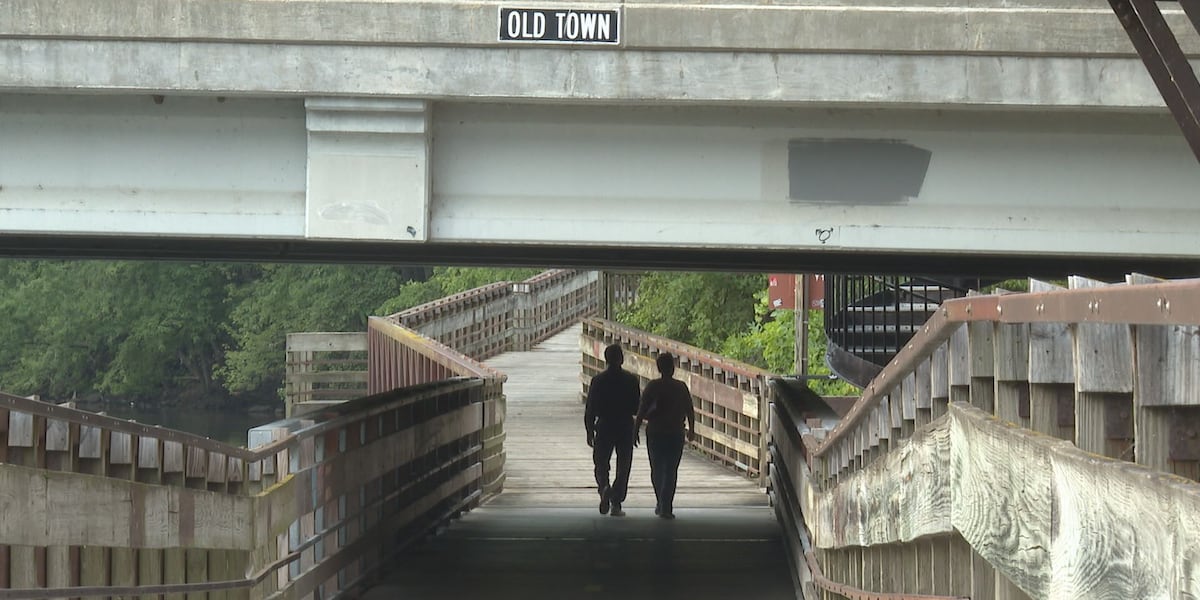
Is a serial killer responsible for five deaths on a Michigan trail?Read it where it was published
Two words and a question mark: you feel a killer on the trail before you learn no official has said one exists. The fear lands on you; the question’s asker keeps the attention and none of the claim.
Five homeless men were fatally injured on the Lansing River Trail between October 2025 and late August 2026. Police say the deaths may be related. On October 12, CNN, The Blaze and The Daily Wire headlined a serial killer.
What they said
On October 2, 2026, Lansing Police Chief Robert Backus said the deaths of five unhoused men injured on the Lansing River Trail may be related; three are ruled homicides and one has led to a charge.
The Blaze
Does Michigan have a serial killer? Lansing police chief says five trail deaths may be connected.
Read it where it was publishedThe Daily Wire
Several Men Found Dead On One Trail, Sparking Serial Killer Fear
Read it where it was publishedWILX News 10Oct 2, 2001
Lansing police say River Trail deaths ‘may be related,’ but still waiting on more medical information
Read it where it was publishedWKAR Public MediaLansing Police Chief Robert BackusOct 2, 2001
“One question we are being asked is, 'Do we have a serial killer in Lansing?’”
Read it where it was publishedWKAR Public MediaLansing Police Chief Robert BackusOct 2, 2001
“We don’t know that, but based on how we found our victims and their surroundings, it would lead us to believe that this could be a pattern.”
Read it where it was publishedThe Detroit NewsOct 4, 2001
Pattern emerges in deaths of unhoused men on Lansing River Trail
Read it where it was published
“Is a” The question that asserts: the headline carries a claim no official has made, and the question mark means no one owns it. Drop the mark and ask who would have to say it.
“serial killer” The words came from Chief Backus repeating a question the public asked him. He never confirmed it. In the headline, the public’s guess becomes the subject of the sentence.
“five deaths” Three of the five are ruled homicides; two still await the medical examiner. One, a stabbing, has a charged suspect. The headline counts all five together before the examiner does.
“Does Michigan have a serial killer?” The same question, scaled up from one trail to a whole state. The next sentence gives the chief’s own, softer words: the deaths may be connected.
“Sparking Serial Killer Fear” The fear has no one sparking it but the dead men. Lower in the same story, the Daily Wire says investigators have not established that the deaths are connected.
“One question we are being asked” The chief relays a question; he does not answer it. The national headlines begin where this sentence begins and leave out the rest of his press conference.
The analysis
CNN’s headline asks a question no official in the story has answered yes to, and that is the tell to carry into the next headline. The words ‘serial killer’ entered the coverage on October 2 as a question Chief Robert Backus said the public was asking him. He said the deaths ‘may be related cases’ and stopped short of the label. The question mark lets the claim travel while no one in the sentence makes it.
The medical examiner’s record moves slower than the headline. Three of the five deaths are ruled homicides; two still await a finding, and one of those is listed as undetermined. One death, the stabbing of Daniel Lusk, 22, has a charge: Edward Joseph Smith, 23, faces open murder, and he is not charged in the others. No weapon is identified in the four blunt-force cases. The headline’s ‘five deaths’ is one count; the examiner has not made it one.
The headline also leaves out who died. All five were homeless white men hurt in the early morning hours. The Detroit News says ‘unhoused men’; CNN says ‘a Michigan trail’, and a reader pictures their own walk. One vivid figure stands in for how often it happens: lower in its own story, the Daily Wire says investigators have not linked the deaths, and cites known active US serial killers falling from nearly 300 in the 1970s to fewer than 50 in the 2010s.
The timing. Chief Backus spoke on October 2. CNN, The Blaze and The Daily Wire headlined the serial killer on October 12. None of the three headlines carries a finding newer than that press conference.
The words. CNN writes ‘a Michigan trail’ and ‘five deaths’. The Detroit News writes ‘unhoused men’. One sentence puts every reader on the trail; the other names the men who were actually there.
The calendar
From the book
The Leading Question: Socratic Steering
CNN puts the answer, a serial killer, inside the question, so the reader leaves holding the claim while no one in the sentence has made it.
Chapter 23, Linguistic Hacks
The Vividness Virus
The film figure of the serial killer fills the frame of five deaths whose causes are partly unruled, and outweighs a count of known active killers that fell to fewer than 50.
Chapter 9, The Cognitive Cascades
Your move
- The Master Question: you are being made to feel fear, the cold kind that follows you onto a path at dawn. Why now? Ten days after a cautious press conference, the question still pulls. What does my fear enable? A click, and a danger larger than the record.
- Does it touch you? If you live in Lansing or walk that trail, the plan is concrete: the hours, the patrols, who walks with you. If not, it is weather. Watch it pass without carrying it into your evening or retelling it as dread.
- Your nudge: which pulled harder, ‘serial killer’ or ‘five deaths’? Name it to yourself, and what you already believed about cities, trails or the people who sleep outside. The same question frightens one reader and bores another; question your own side too.
Sources CNNThe BlazeThe Daily WireWKAR Public Media2WILX News 10The Detroit NewsNBC NewsWLNS