
Christian Post gives Jordan’s unknown church gunmen a faith
The Christian Post
Islamic extremists kill Christians in mass shooting at funeral in JordanRead it where it was published
One adjective, ‘Islamic’, turns unidentified gunmen into a faith and the mourners into its targets. You feel a religious war before you learn that Jordan’s own officials said only ‘extremists’.
Gunmen killed 7 people at a funeral in a Greek Orthodox church in Karak, Jordan, on October 23, and no group claimed it. The Christian Post’s headline names the killers’ faith, which Jordan’s officials did not.
What they said
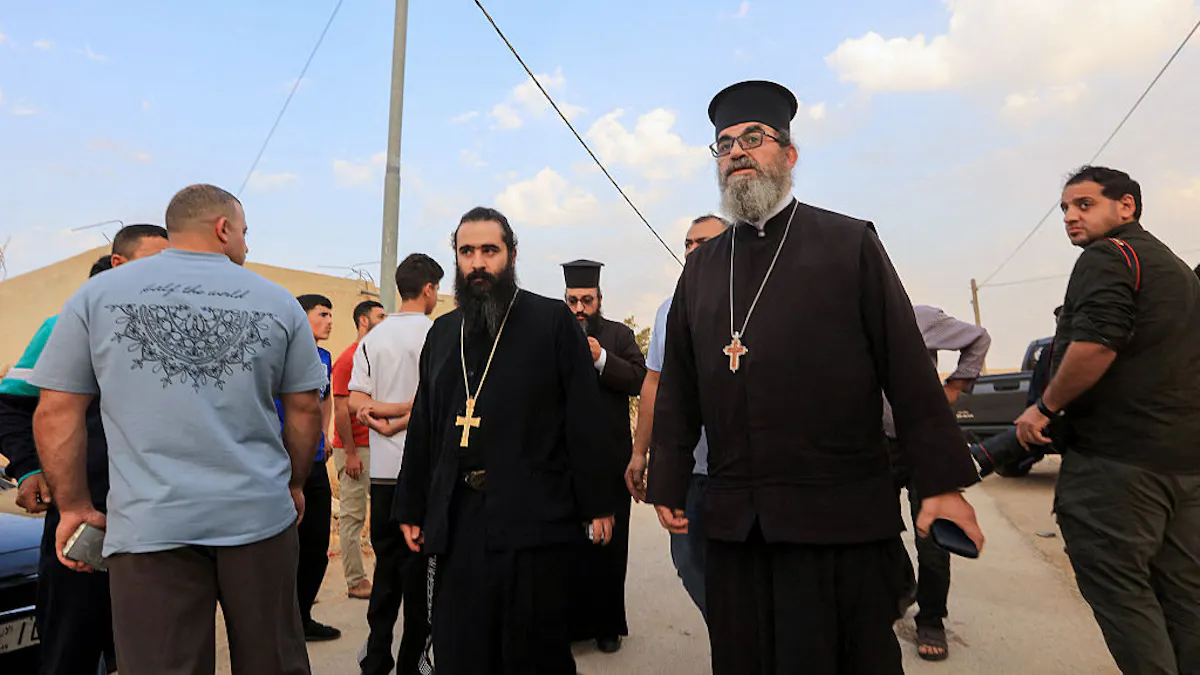
On October 23, 2026, unidentified gunmen opened fire during a funeral at a Greek Orthodox church in Hammoud village, Karak governorate, Jordan, killing 7 people and wounding dozens; officials called it a terrorist attack.
Al ArabiyaOct 23, 2026
Jordan Minister: Church Attack Carried Out By ‘Extremists’
Read it where it was publishedThe Christian PostMazen al-Farrayeh, Jordan's Interior Minister (as reported by al-Monitor, quoted on the Christian Post page)Oct 23, 2026
“terrorist operation carried out by a group of extremists”
Read it where it was publishedReutersOct 23, 2026
Seven killed as gunmen open fire at church in Jordan in 'terrorist' attack, authorities say
Read it where it was publishedPress TV
Seven killed, 34 injured in ‘Takfiri’ terror attack on church in southern Jordan
Read it where it was publishedThe Daily WireOct 23, 2026
Mourners Slaughtered By Terrorists During Funeral At Christian Church
Read it where it was publishedPBS NewsHour (AP)Ahmed al-Tayeb, Grand Imam of Al-AzharOct 23, 2026
“heinous terrorist attack”
Read it where it was publishedThe Christian PostRev. Botrus Mansour, secretary general of the World Evangelical AllianceOct 23, 2026
“Any attempt to exploit this tragedy to sow division, incite sectarian tension, or spread hatred must be firmly rejected.”
Read it where it was published
“Islamic” One adjective turns unidentified gunmen into a faith’s representatives. The page’s own first paragraph says ‘suspected’ and credits ‘reports’; the headline keeps the label and drops the doubt.
“kill Christians” Victims named by faith beside killers named by faith: the sentence reads as one religion against another. The funeral, the village and the count of 7 come after.
“‘Extremists’” The minister’s word, in quote marks, with no faith attached. Al Arabiya posted it at 1:57 PM ET, over an hour before the Christian Post headline.
“a group of extremists” The same minister’s words sit on the Christian Post’s own page, in its tenth paragraph. The headline adds the one word the quoted official did not say.
“‘Takfiri’” A word for militants who brand other Muslims unbelievers. It assigns the gunmen a creed too, from inside a different set of readers’ expectations, with no named source.
“Slaughtered” A butcher’s verb puts the reader in the room with the dead. The killers stay ‘Terrorists’, with no faith and no source in the line.
The analysis
The sentence has a subject, and the subject is a faith. ‘Islamic extremists kill Christians’ sets one religion against another before the reader reaches Jordan. The facts under it are thinner: the attackers were not publicly identified, no group claimed the shooting, and a Jordanian government statement, per the AP, said ‘unknown assailants’. The page itself backs off: its first paragraph says ‘suspected Islamic extremists’, citing ‘reports’, and its only source for the label, in the fifth paragraph, is an unnamed ‘religious rights source’ describing a video.
The device is the verdict noun with a faith fastened to it. ‘Extremists’ was the minister’s word, and it sits in the article’s tenth paragraph. ‘Islamic’ was added between the official and the headline. The habit it rides is us and them: one unknown gunman’s faith is made to stand for everyone who shares it, while the mourners’ faith makes them the people of the page. The tell is the qualifier that vanishes on the way up: ‘suspected’ in the paragraph, gone in the headline.
Each outlet named the killers in words its readers know. Reuters wrote ‘gunmen’ and gave ‘terrorist’ to ‘authorities’. Press TV wrote ‘Takfiri’. The Daily Wire wrote ‘Slaughtered By Terrorists’. Missing from the faith-against-faith sentence are the Muslims who answered it: the Grand Imam of Al-Azhar called it a ‘heinous terrorist attack’, King Abdullah II said bullets would not ‘divide Jordanians’, and the World Evangelical Alliance, quoted on the same page, warned against using it to ‘incite sectarian tension’.
The timing. Al Arabiya posted the minister’s word, ‘Extremists’, at 1:57 PM ET on October 23. The Christian Post headline went up at 3:15 PM ET. The word without a faith was already public.
The history. In December 2016, gunmen attacked police across Karak, including at its Crusader castle, killing 10, 7 of them officers, before security forces killed the gunmen. Then too, the first question was who they were.
From the book
Loaded Language: Emotive Framing
One adjective, ‘Islamic’, does the work of evidence the page does not have: the headline convicts a faith while the article’s own sourcing is ‘reports’ and one unnamed activist.
Chapter 23, Linguistic Hacks
The six stages of villainization (From Humans To Monsters)
The headline jumps to Essentialization: an act by unidentified gunmen is filed under a religion before anyone is named, and the victims are filed under the opposite one.
Chapter 10, The Enemy's Gift
Your move
- The Master Question: you are being made to feel fear and anger, Christians hunted by a faith, while the dead are still being counted. Why now? The first hours fix the frame before names arrive. For anger: why do they need my anger?
- Does it touch you? Unless you have people in Karak, this changes nothing you will do this week. It is weather: grieve the 7 if you choose, and watch the frame pass without bleeding it into your evening or feeding it to others.
- Your nudge: which word pulled first, ‘Islamic’, ‘Takfiri’ or ‘Slaughtered’? Name it, and the belief about Muslims or Christians it pressed on. The same headline hardens one reader and repels another; question the side you are on too.
Sources The Christian PostAl ArabiyaReutersPress TVThe Daily WirePBS NewsHour (AP)ABC7 San Francisco (AP)The Washington PostHaaretzFox News