
BBC counts South Africa’s murdered women and names no killer
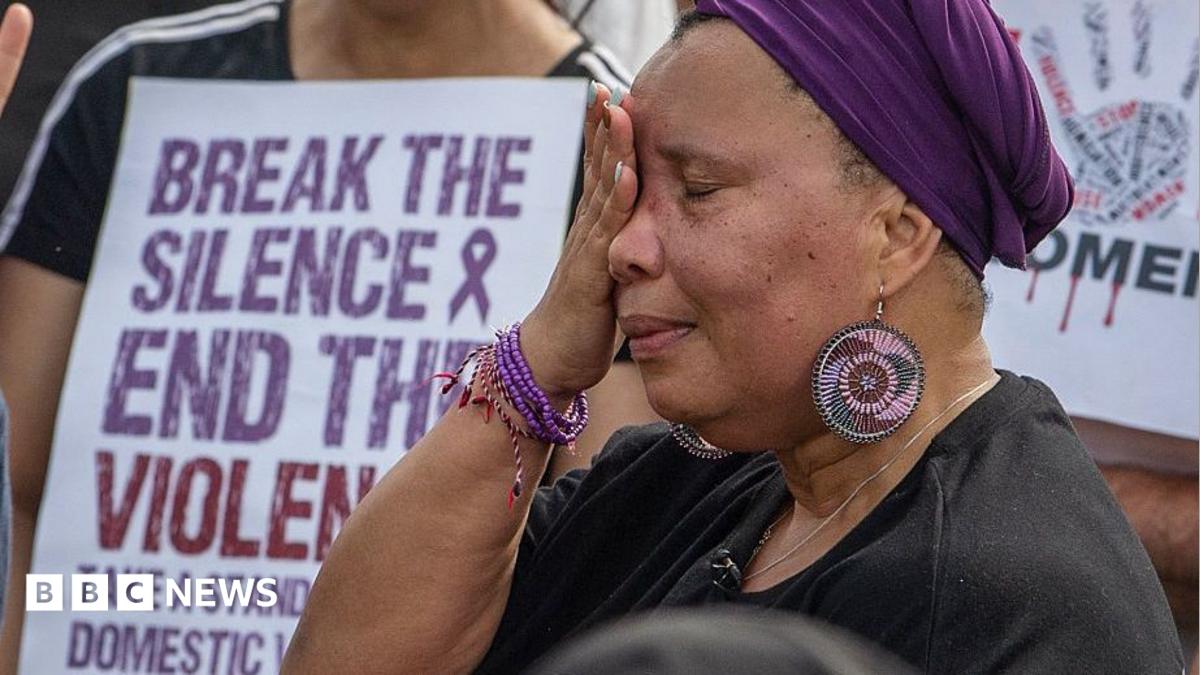
BBC News
Nearly 600 women killed in South Africa within three monthsRead it where it was published
Nearly 600 women and no one who killed them: you feel grief and dread, your eye stays on the count, and the killers and the police paid to catch them stay off the page.
On November 20, South Africa’s police reported 581 women murdered from July to September, 159 of them in domestic-violence cases. The BBC headlined it “Nearly 600 women killed”, with no one doing the killing.
What they said
On November 20, 2026, the South African Police Service reported 5,590 murders from July to September 2026, including 581 women, 159 of them in cases it classified as domestic violence.
The South AfricanNov 20, 2026
SA crime stats: 5 590 killed in just three months
Read it where it was publishedBriefly News
South Africa Records 581 Murders of Women in Three Months
Read it where it was publishedSouth African Government News (SAnews)Nov 20, 2026
SAPS records decline in most violent crime categories, but murder remains too high
Read it where it was publishedIndependent on SaturdayNov 20, 2026
Crime stats: KZN leads domestic violence-related rape cases as 1,417 children affected
Read it where it was publishedSouth African Government News (SAnews)Firoz Cachalia, Acting Minister of PoliceNov 20, 2026
“These figures require a response that is both firm and intelligent. The police must arrest perpetrators, recover weapons, disrupt gangs and bring organised criminals before the courts”
Read it where it was publishedSouth African Government News (SAnews)Paul Mashatile, Acting PresidentNov 20, 2026
“True transformation demands that men step forward, not as passive bystanders, but as visible, accountable leaders.”
Read it where it was published
“Nearly 600 women” The police count is 581, about 1 in 10 of the quarter’s 5,590 murders. The round figure sets the scale before any comparison arrives.
“killed” The passive verb keeps the deaths and drops whoever caused them. Read it with a subject and see who would have to appear: a partner, a stranger, a gang.
“within three months” The clock reads like a surge. The BBC’s eighth paragraph says police had stopped giving this figure over “significant anomalies”, so no earlier quarter stands beside 581.
“decline” The government’s news agency leads with the release’s good news: 5,590 murders against 5,794 a year earlier. Same figures, relief in place of horror, and still no killer in the sentence.
“affected” By the police’s domestic-violence breakdown, as Action Society reports it, 1,417 children were raped. “Affected” is the soft word: a crime with a perpetrator becomes a condition.
“men step forward” The Acting President’s speech puts men in the sentence as the ones who must act. The police breakdown gives the victim’s relationship to the killer only for 159 of the 581 women.
The analysis
“Nearly 600 women killed” has a count, a country and a clock, and no one holding the weapon. The women are the only people in the sentence; things happen to them. That is the tell to carry into the next headline: a death with no doer, the act with no actor. The police’s own figures allow a plainer sentence: SAPS recorded 581 murders of women from July to September, 159 of them domestic-violence murders. The BBC page names attackers once, “three masked men” in a Free State shooting, in its tenth paragraph.
The frame picks the feeling. The government’s news agency read the same release as “records decline”: 5,590 murders, 204 fewer than the 5,794 of a year earlier. The BBC’s own eighth paragraph says it cannot tell whether 581 is a rise or a fall. One release, relief in the government’s headline, horror in the BBC’s, and neither has a killer: “murder remains too high” is as empty of people as “women killed”. The mind takes whichever feeling the frame hands it; the habit is called framing.
Told as deaths that happen, the story asks nothing of anyone. The police breakdown reported today gives the relationship between victim and perpetrator only for the 159 women in domestic-violence cases, and Action Society is asking SAPS to publish the relationship figures still outstanding. Acting Police Minister Firoz Cachalia said nearly 3,000 of the quarter’s murders took place in public places such as streets and open fields. Partners, strangers, gangs and the police whose job is arrests all stay outside the headline; the reader’s eye stays on the women.
The timing. The police released the quarter on November 20, the day Acting President Paul Mashatile launched the 16 Days of Activism in Middelburg, Mpumalanga, calling on men to act.
The words. Daily Maverick’s report on the same release gives no figure for women murdered; the BBC’s gives no domestic-violence figure. Each page keeps a different part of one police release.
From the book
The Narrative Frame
Chapter 9, The Cognitive Cascades: The Narrative Frame. One police release becomes “records decline” in the government’s headline and “Nearly 600 women killed” in the BBC’s; the figures are the same, and the story wrapped around them sets the reaction.
Chapter 9, The Cognitive Cascades
Negative hallucination
Chapter 17, The Shepherd of the Blind: negative hallucination. The BBC headline holds the dead and the clock; the killers, the domestic-violence figure and the police all sit outside it, and seeing them takes looking for what is missing.
Chapter 17, The Shepherd of the Blind
Your move
- The Master Question: you are being made to feel grief and dread, with nowhere to put them. Why now? The figures landed the day South Africa opened its 16 Days of Activism. For fear, ask what your fear enables when the sentence names no one.
- Does it touch you? If you live in South Africa, or someone you love does, ask what plan this asks of you this week, not what feeling. If not, it is weather: watch it without bleeding it into your evening or feeding it to anyone.
- Your nudge: which word held you, “Nearly 600”, “killed” or “decline”? Name the belief it pressed on: that the country is lost, or that it is mending. The same release nudges two readers opposite ways, including the reader on your side.
Sources BBC NewsSouth African Government News (SAnews)2Independent on SaturdayBriefly NewsThe South AfricanDaily MaverickAction Society