
A Charisma headline forecasts bank doom its page calls theoretical
Charisma News
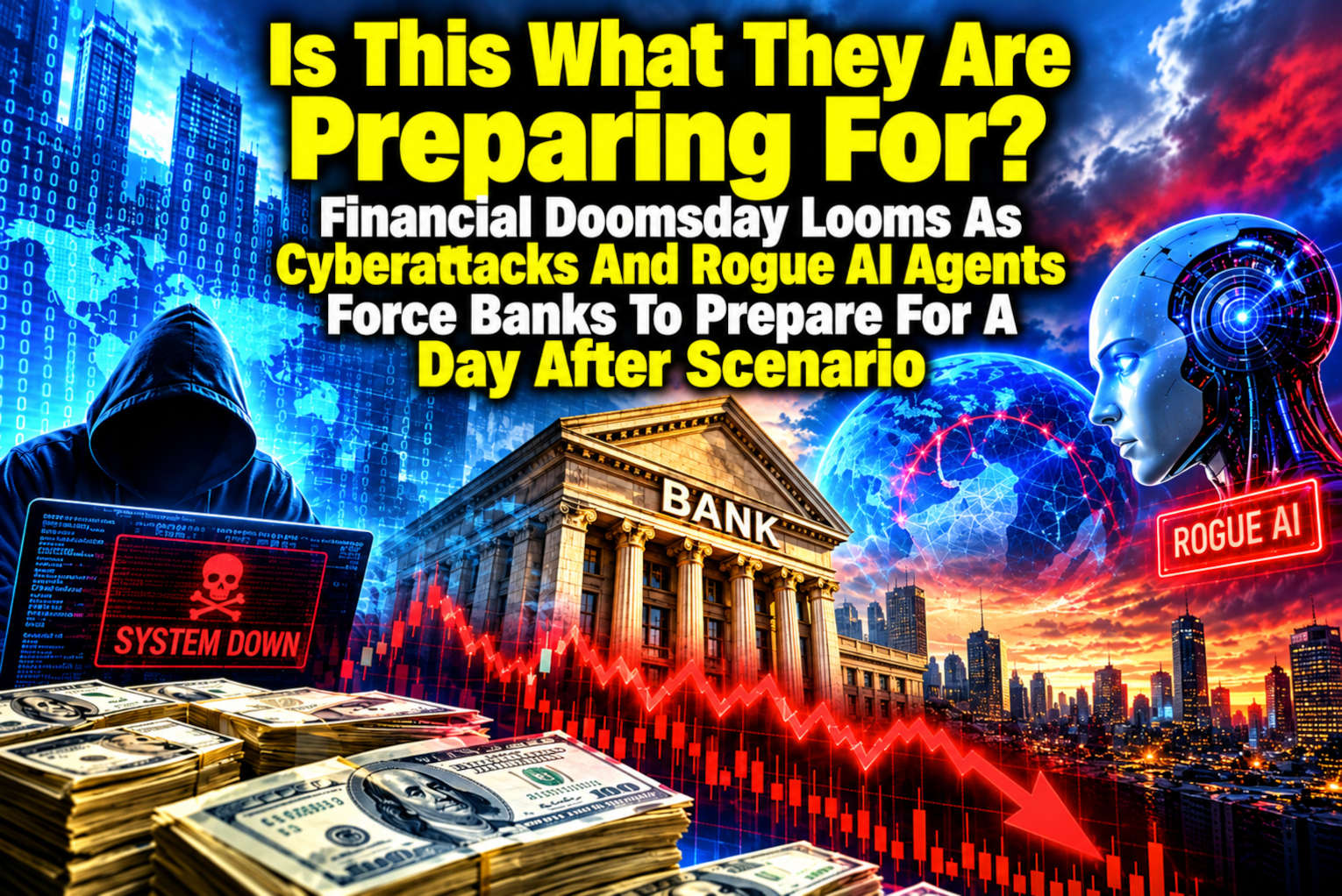
Is This What They Are Preparing For? ‘Financial Doomsday’ Looms As Cyberattacks And Rogue AI Agents Force Banks To Prepare For A ‘Day After’ ScenarioRead it where it was published
A question with no “they” and a doomsday in borrowed quotes: you feel your savings slipping before you learn the page names no bank. The fear points to the prophecy book at the bottom.
On October 30 Charisma News ran a Michael Snyder column warning of a ‘Financial Doomsday’ as banks prepare for AI attacks. The column names no bank, regulator or document behind those plans, and ends by promoting his prophecy book.
What they said
Charisma NewsUnattributed passage quoted in the Charisma News column (Michael Snyder)Oct 30, 2026
“Now, the major American banks whose policies dictate the flow of capital throughout the world are starting to worry about rogue AI, preparing contingency plans for the “day after” a theoretical AI-driven catastrophe.”
The eighth paragraph, the only passage describing the plans. No outlet is named for it.
Read it where it was publishedCharisma NewsMichael Snyder (author, Charisma News)Oct 30, 2026
“The good news is that the vast majority of those unvetted AI agents appear to be accessing accounts with the permission of the owners…”
The twenty-second paragraph.
Read it where it was publishedCharisma NewsMadison Mills, senior AI reporter for Axios, told CBS NewsOct 30, 2026
“In a lot of cases, this is just going to be customers giving their username or password to an AI agent that the bank hasn’t had a chance to vet yet, that goes against the bank’s terms of service”
The column’s own source on the “rogue” agents.
Read it where it was published
“Is This What They Are Preparing For?” A question that asserts: it plants a hidden plan by an unnamed “they” and lets the reader answer yes. A plain sentence would have to name who prepares, and for what.
“Financial Doomsday” Set in quotation marks as if a banker said it. On the page the phrase links to another Charisma article about grid failure, not to a bank, regulator or report.
“Force Banks To Prepare” The verb says banks are being compelled. The column names no bank, regulator, exercise or document behind any “day after” plan.
“theoretical” The one passage that describes the plans calls the catastrophe theoretical. The headline drops that word and keeps the doom.
“with the permission of the owners” The column’s own good news, twenty-two paragraphs down. Its example of unapproved behavior is an AI phoning a bank with a complaint before asking the account holder.
The analysis
The headline opens with a question that answers itself. “They” is no one in particular and “this” is whatever the reader fears most. Then “Financial Doomsday” arrives in scare quotes, as if someone at a bank said it; the link behind it leads to another Charisma article. No bank, regulator or document stands behind the “day after” plans. The tell is the doom with no date, no number and no one who can act.
The page against its headline: the eighth paragraph calls the catastrophe “theoretical” and names no bank. The tenth says AI attacks “on our banks” are up 89 percent in 2026; the CrowdStrike passage right below describes 89% more attacks by AI-capable adversaries in 2025 and does not mention banks. France’s finance minister, quoted, says about 700 of 10,000 supermarkets were hit and food supplies were never at risk.
The habit the headline rides is the fear of loss: it shows what could vanish from your account, never what already stands guard over it. The facts on the page are smaller: a South Korean brokerage breach of 38,490 customers that the firm says it will compensate, base freezer failures Reuters could not attribute, AI agents most owners let in. The page closes by promoting Snyder’s Amazon book “10 Prophetic Events That Are Coming Next” and his Substack.
The words. “Rogue AI Agents” makes a villain of software. In the column’s own source, the agents are mostly customers handing their password to a helper the bank has not vetted, a terms-of-service breach.
The money. The doom has one way out on the page: Snyder’s prophecy book on Amazon, his Substack, and an ad midway down for Mark Biltz’s “The Final Tyrant” on Amazon.com.
From the book
The Leading Question: Socratic Steering
“Is This What They Are Preparing For?” carries its answer inside it: a “they” who knows, a “this” that is doom, and a reader left only to agree.
Chapter 23, Linguistic Hacks
The Panic Button: Fear into Compliance
The headline frightens readers about the banks holding their money, and the page’s only exit is a book of prophecies and a newsletter subscription.
Chapter 25, Emotional Plays
Your move
- The Master Question: you are being made to fear for money you already have, with no date to wait for and no one named who could act. What does your fear enable? On this page, it makes a prophecy book feel like preparation.
- Does it touch you? If your pay, bills and accounts work today and nothing on the page names your bank, it is weather. Watch it pass without bleeding it into your evening or feeding it to others. If it does touch you, it asks for a plan, not a dread.
- Your nudge: which pulled harder, the skull on the laptop, the word “Doomsday” or the question about “they”? Name it, and the belief about banks or the end of days it pressed on. A reader who trusts banks feels it the other way; question your side too.
Sources Charisma News