
A BBC headline on Oleshky’s hunger names no army
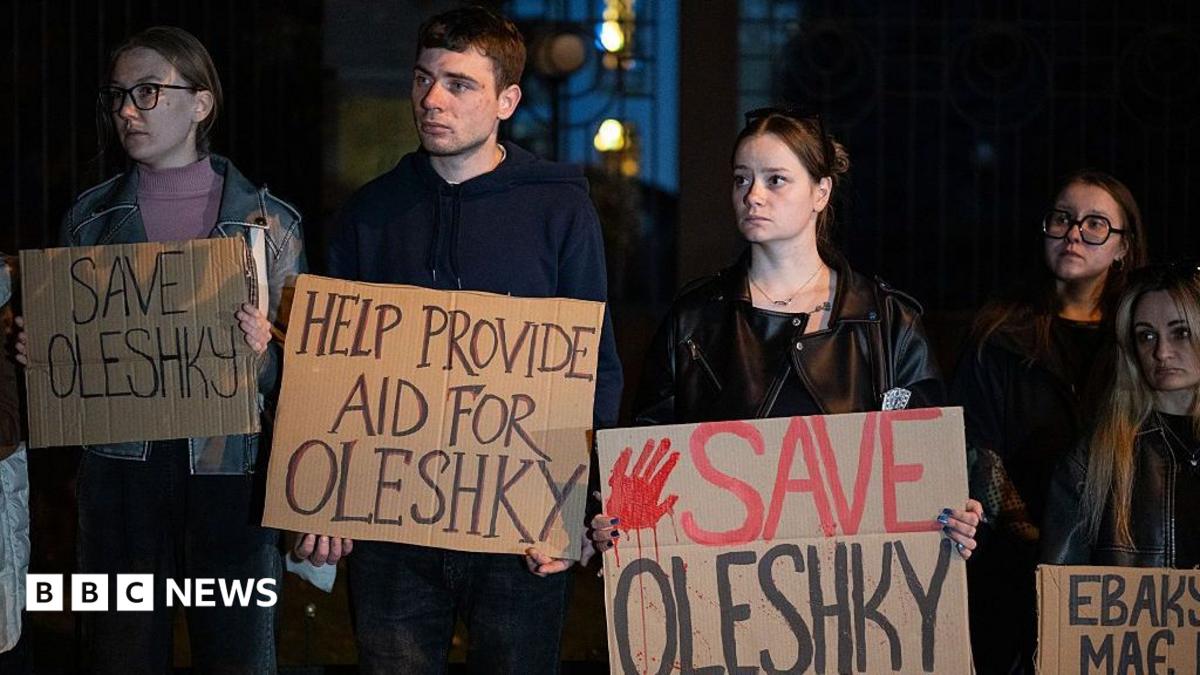
BBC News Europe
Truce begins in Ukraine city where residents ate weeds to surviveRead it where it was published
The weeds reach you before any army does: pity arrives, and anger finds no address. A starvation with no author asks nothing of whoever holds the roads, and leaves the credit to the broker.
A local ceasefire took effect on October 27 in and around Russian-occupied Oleshky, in Ukraine’s Kherson region, to let aid in and civilians out. The BBC headlined it as a city where residents “ate weeds to survive”.
What they said
On October 27, 2026, a local ceasefire took effect in and around Russian-occupied Oleshky, in Ukraine’s Kherson region, to allow aid deliveries and evacuations.
EuronewsSep 28, 2026
Ukraine's city of Oleshky faces starvation as Russia blocks all aid
Read it where it was publishedMeduzaOct 27, 2026
Trapped without food, electricity, or medicine, civilians in occupied Oleshky finally have a chance to escape. But even those wishing to go to Ukraine will reportedly be taken to Russia first.
Read it where it was publishedBreitbartOct 27, 2026
Localised Ukraine Ceasefire Brokered by Melania Trump Begins in Russian-Invaded City
Read it where it was publishedReutersOct 27, 2026
US-brokered truce appears to hold in Ukrainian town close to starvation
Read it where it was publishedWhite HouseMelania Trump, US First LadyOct 23, 2026
“The situation in Oleshky is dire. Oleshky is a front-line war city on the brink of disaster.”
Read it where it was publishedBBC News EuropeThe Kremlin (as reported by the BBC)
“problems with supplies of food and medicine”
Read it where it was publishedBBC News EuropeOleshky resident (unnamed)Oct 27, 2026
“I don't believe in Russia's humanity.”
Read it where it was published
“ate weeds” The hottest image in the line, and its only verb belongs to the starving. Hunger becomes something residents did, never something done to them.
“Ukraine city” Names whose city it is on the map, not who holds it. The BBC’s own first paragraph calls it “the Russian-occupied Ukrainian city”.
“Russia blocks all aid” The same hunger with a subject and a verb, a month earlier. Euronews rested it on ground reports; Reuters notes that Russia and Ukraine blame each other.
“will reportedly be taken to Russia first” The road out, and who sets its direction. Russia-installed governor Vladimir Saldo named Crimea or Rostov-on-Don. The hedge word rests the claim on the Financial Times.
“on the brink of disaster” The White House statement names no one either: a front-line city with no army holding it. Disaster comes like weather, and the broker is the only one acting.
“problems with supplies of food and medicine” A soft phrase for a city that, by ground reports Euronews cited, got no food through regular channels since May. The BBC says the Kremlin blamed Kyiv.
The analysis
The headline has one verb that does any work, and it belongs to the starving: residents ate weeds. Nobody besieged them, blocked a road or held back a truck. Even the truce simply begins, with no parties to it. That is the act with no actor: hunger arrives like weather. The facts a plain sentence would need are on the record. Russia has held Oleshky since the early days of the February 2022 invasion, and Euronews cites ground reports that no food reached it through regular channels since May.
The frame picks the feeling. Told as residents eating weeds, the city moves you to pity; told as Euronews told it on September 28, “Russia blocks all aid”, the same hunger moves you toward a verdict. The BBC’s page says more than its headline: its first paragraph calls Oleshky Russian-occupied, its third says the city is trapped “by Russian forces”. Its mined roads and drone attacks still have no author, and Reuters notes that both armies’ drones reach the town and each side blames the other.
Russian forces hold the city and its exits; the Financial Times, cited by Meduza, reports that even evacuees bound for Ukraine go through Russia first. The White House counts 1,700 to 2,000 people left, about 50 of them children. With no author for the hunger, the only actor left in the story is the broker, a role the White House and the Vatican both claim. A resident told the BBC: “I don’t believe in Russia’s humanity.” The tell: when the only people acting are the hurt ones, ask who holds the food.
The words. A truce needs two sides, and the headline names neither. Ukraine’s rights commissioner Dmytro Lubinets named his Russian counterpart, Yana Lantratova, as a partner in the mission; the headline keeps both armies out of frame.
The timing. The White House said on October 23 that the truce would start October 29. Melania Trump said it began two days early, on October 27, one week before the November 3 US midterms.
The calendar
- Sep 28, 2026Euronews: Russia blocking aid to about 2,000 residents
- Oct 23, 2026White House announces Oleshky ceasefire
- TodayTruce takes effect; BBC headline runs
- Oct 29, 2026Original start date in the White House statement
- Nov 3, 2026US midterm elections
From the book
The Narrative Frame
The same blockaded city is told as a hunger story by the BBC and a blockade story by Euronews. One frame hands the reader pity, the other a verdict, from the same facts.
Chapter 9, The Cognitive Cascades
Negative hallucination
The occupying force sits in the BBC’s own first and third paragraphs and is missing from the headline most readers see. The absence is the thing to notice.
Chapter 17, The Shepherd of the Blind
Your move
- The Master Question: the headline is built to make you feel pity, fast and with no target. Why now? A truce is starting and its credit is being claimed. Feel on purpose, or not at all: pity that names no one changes nothing.
- Does it touch you? For most readers it changes nothing in money, work or family this week. Then it is weather: watch it like a storm, without bleeding it into your evening or feeding it to anyone. If it touches your family, it asks for a plan.
- Your nudge: name the word that pulled at you: “weeds”, “Truce”, “occupied” or “Russian-Invaded”. Then name the belief it pressed on, about Russia, Ukraine, the BBC or the First Lady. The same line pulls two readers opposite ways; question your own side too.
Sources BBC News EuropeEuronewsMeduzaBreitbartReutersThe Detroit News (Reuters)White HouseCNNAl Jazeera