
A Maesa grantee names 5-year-olds’ nails a ‘category’
Sugar StandardSugar Standard (homepage copy)
“They get the nails they love. You skip the salon.”Read it where it was published
The ad tells you what your child already loves and that you are saving money. You feel relief at the checkout, and the brand gains a salon habit for a 5-year-old that arrived unasked.
Maesa named the 2027 class of its Magic Incubator on October 5: Sugar Standard, press-on nails for ages 5 to 12; Gemi, K-beauty hand care; and Beame, UV-detection SPF patches. Each founder gets a $35,000 grant and mentorship.
What they said
On October 5, 2026, Maesa named Sugar Standard, Gemi and Beame to its 2027 Magic Incubator class, each founder receiving a $35,000 grant and mentorship.
GlossyOct 5, 2026
Maesa backs K-beauty hand care, tween manicures and SPF patches as the future of beauty
Read it where it was publishedGlossyMonique Claiborne Cardwell, founder of Sugar StandardOct 5, 2026
“We’ve already brought Sugar Standard to market, and Maesa Magic can help us take what we’ve built and scale it into a major beauty brand that defines the junior nail category”
Read it where it was publishedGlossyPiyush Jain, CEO of MaesaOct 5, 2026
“Hopefully in 10 years from now, there’ll be a brand that breaks the $100 million barrier, and they went through the program at some point”
Read it where it was publishedSugar StandardSugar Standard (product page copy)
“Elevated charm details deliver the looks tweens love—without the salon time, mess, or damage.”
Read it where it was publishedSugar Standard
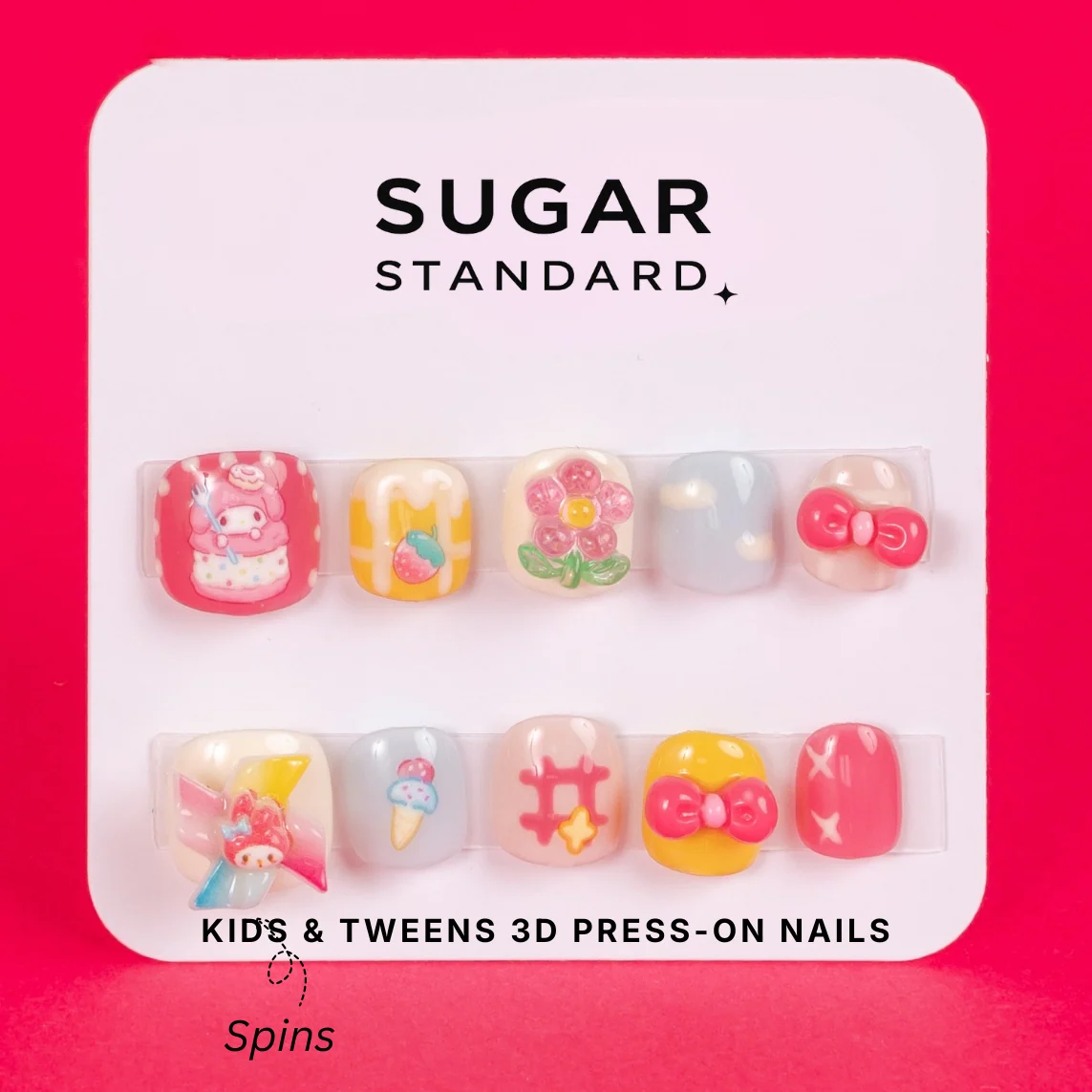
The Twirl and Friends tween set: ten small nails with bows, a strawberry, an ice cream cone and a cartoon character on a hot pink ground. Childhood motifs in a salon format.
See it where it was publishedSugar Standard
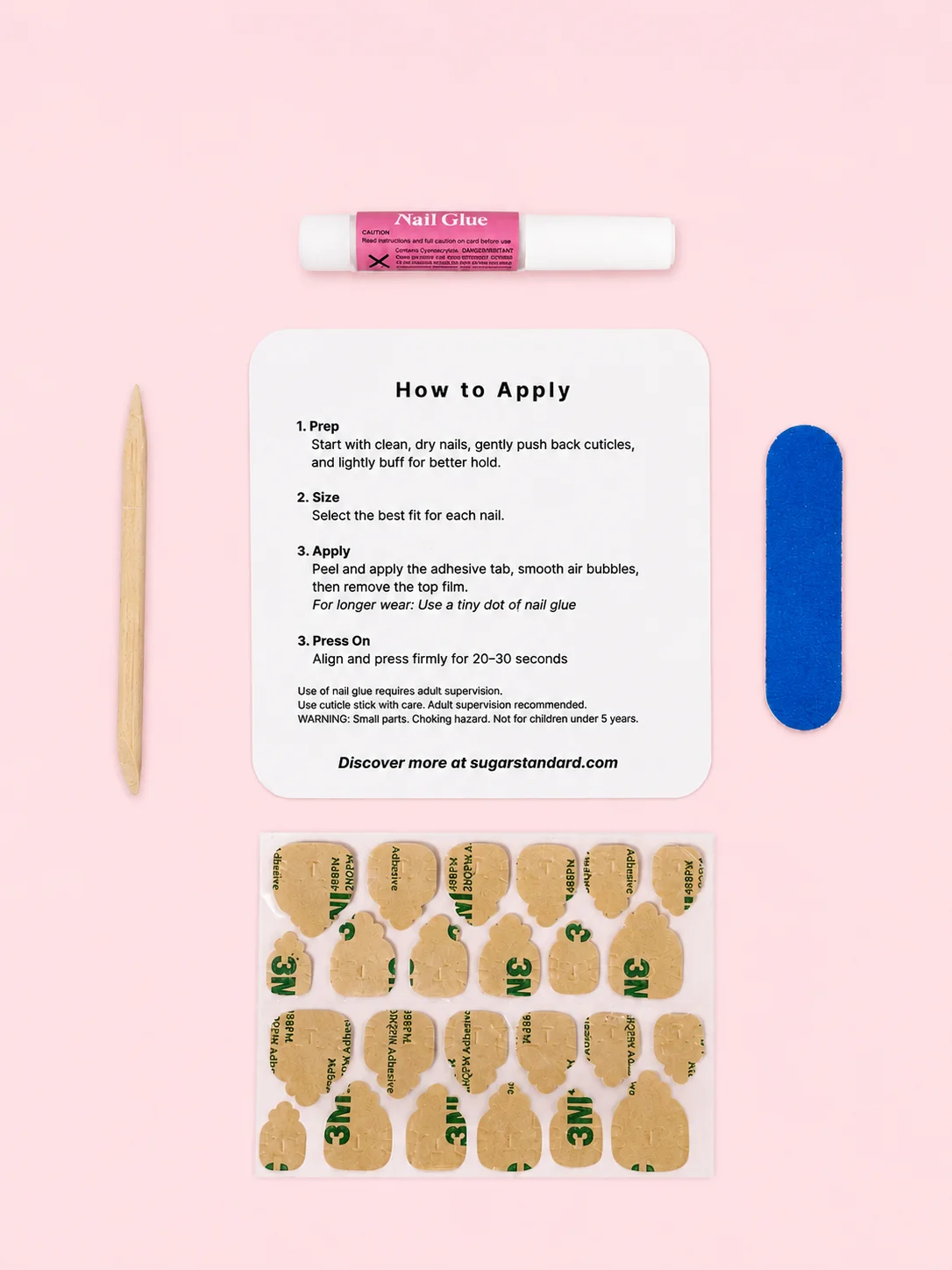
The kit: nail glue, a cuticle stick, a file, adhesive tabs and an instruction card that warns of small parts. The page’s own file name shows the image was made with ChatGPT.
See it where it was publishedModern RetailOct 5, 2026
From influencers to AI, here’s what Gen Alpha thinks about your brand
Read it where it was published
“backs” The verb suggests money at stake. The same article reports Jain saying Maesa does not invest in participants: each founder gets a $35,000 grant and mentorship, no equity.
“the future of beauty” A press-on set for a 5-year-old is filed under the industry’s future. The child arrives as tomorrow’s market, a frame handed to the reader as settled.
“defines the junior nail category” A child’s hands become a category to define and own. This is shelf language, spoken to a trade audience, about customers in kindergarten and grade school.
“the nails they love” The love is presupposed, never shown. The parent is told the want already exists, so buying feels like answering a child rather than creating a wish.
“You skip the salon” The salon is quietly set as the normal place for a child of 5 to 12. Against that baseline, $16 at home feels like saving, not spending.
“damage” The copy names the harm a salon would do to a tween’s nails, then sells the escape. The adult ritual is assumed; only its costs are removed.
The analysis
Two vocabularies describe one 8-year-old. To the trade, Glossy calls Sugar Standard a “kid- and tween-targeted press-on nail brand”, its founder speaks of “the junior nail category”, and Maesa’s CEO hopes for an alumnus that “breaks the $100 million barrier”. Here the child is a target and a category. Glossy’s text never says “girl” or “Gen Alpha”; that label sits only in the URL of a linked story about Gen Alpha “beauty consumers”.
To the parent, the same child becomes “They”, someone who already loves something: “They get the nails they love. You skip the salon.” The trigger is belonging, not shame about hands. The salon, a ritual of older girls and grown women, is set as the default, and the $16 kit becomes the thrifty, safe way in. The tell is the want stated as fact: when an ad tells you what a child loves, someone wrote that wish before she had it.
The parent pays, $16 a set. The brand gains, and so does an industry that, in Modern Retail’s report, counts $100 billion a year in Gen Alpha direct spending power and seats middle and high schoolers on a Shoptalk panel to explain “what Gen Alpha thinks about your brand”. The kit’s own card warns of small parts and rules out children under 5. The age range on the box starts at 5.
The money. Each founder gets $35,000 and mentorship until January, with no equity: Maesa says it does not invest in alumni. Jain’s stated hope is one alumnus that “breaks the $100 million barrier” within 10 years.
The irony. Maesa’s CEO says consumers want “a purpose beyond selling a product”. The class includes a product page promising “the looks tweens love”, at $16 a set.
From the book
The Historical Future (presupposition and temporal distortion)
The phrases “the nails they love” and “the looks tweens love” smuggle a child’s desire into the sentence as an established fact, and “skip the salon” presupposes the salon as the alternative a 5-year-old would otherwise have.
Chapter 11, The Serpent's Tongue
Drive Four: The Belonging Imperative (Tribalism/Connection)
The copy shrinks a grown-up salon ritual to child size and price, so a first-grader’s set reads as entry into what older girls already do.
Chapter 7, The Strings of the Heart
Your move
- The Master Question: the parent’s copy offers relief, a treat that saves money; the trade copy offers excitement about a new category. Both arrive with one grant announcement. Run the Neutral Curiosity Test: anything you feel beyond neutral curiosity was installed.
- Does it touch you? If a child of 5 to 12 lives with you, it asks a decision, not a feeling: what she wants, and who told her. If not, it is weather: watch it pass without carrying it into your evening.
- Your nudge: name the word that moved you: “love”, “salon”, “category” or “damage”. A parent who treasures her own first manicure and one who dreads early makeup read the same line in opposite ways. Question both, including yours.